
Introduction
Hospitals rely on medical equipment throughout the day to assess patients, perform tests, monitor vital signs, and support treatment. When an essential device stops working unexpectedly, staff may need to delay a procedure, find replacement equipment, or arrange a repair.
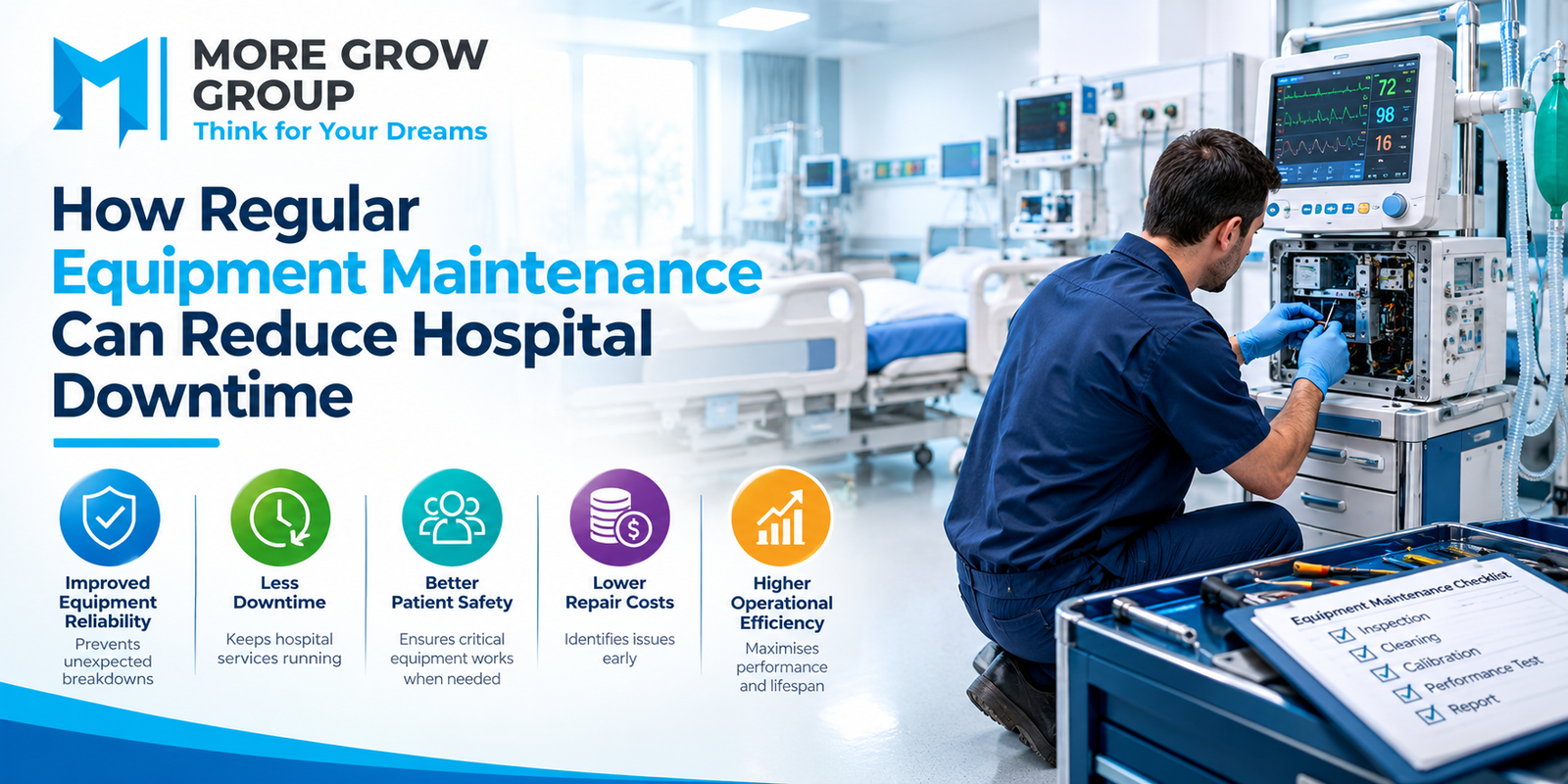
Regular equipment maintenance helps hospitals identify wear, damage, and performance problems before they lead to avoidable failures. It also helps teams plan servicing at times that cause less disruption to clinical work.
No maintenance programme can prevent every breakdown. However, a structured approach can improve equipment reliability and help hospitals respond more quickly when faults occur. The World Health Organization describes medical equipment maintenance as a combination of inspection, preventive maintenance, and corrective maintenance.
1. What Is Hospital Equipment Downtime?
Equipment downtime is the period when a device cannot be used for its intended purpose. It may be unavailable because of a breakdown, a safety concern, a planned service, a missing part, or a failed performance check.
Downtime can affect equipment such as:
- Patient monitors
• Infusion pumps
• Defibrillators
• ECG machines
• Laboratory analysers
• Sterilisation equipment
• Medical refrigerators
• Imaging equipment
• Oxygen delivery equipment
• Hospital beds and other powered devices
The effect of downtime depends on the device, how many alternatives are available, and how urgently it is needed.
2. What Is Regular Equipment Maintenance?
Regular maintenance involves planned activities that help keep equipment suitable for use. The work required varies by device and should follow manufacturer instructions, the hospital’s procedures, service history, and clinical risk.
Maintenance may include:
- Visual inspection
• Cleaning and care specified by the manufacturer
• Checks for worn or damaged components
• Functional and safety testing
• Replacement of service parts
• Software checks where applicable
• Calibration or performance verification where needed
• Documentation of findings and repairs
Preventive maintenance takes place before a known failure. Corrective maintenance addresses a fault that has already occurred. Both are needed in an effective equipment management programme.
3. How Does Maintenance Help Reduce Downtime?
It Helps Detect Problems Early
An inspection may reveal a damaged cable, weak battery, loose connection, or unusual performance before the equipment fails during use.
Finding a problem early gives the hospital time to assess the device, arrange service, and prepare an alternative if required.
It Makes Servicing Easier to Plan
Planned maintenance can be scheduled with the relevant department. Staff can arrange access to the device and, where possible, make a suitable replacement available.
This does not remove the time needed for servicing, but it can reduce disruption compared with an unexpected breakdown.
It Supports Faster Repairs
A complete service history can help technicians identify repeated faults and see which parts were previously replaced. Clear fault reports also help them prepare the right tools or components before attending the site.
It Helps Hospitals Plan Replacement
Maintenance records can show when a device is becoming less reliable or difficult to repair. Hospital managers can use that information to plan replacement before the equipment becomes unavailable for an extended period.
4. Why Is an Equipment Register Important?
A hospital cannot manage maintenance effectively unless it knows which equipment it has, where it is located, and when it needs attention.
An equipment register may include:
- Equipment name and purpose
• Manufacturer, model, and serial number
• Asset identification number
• Department and location
• Date placed into service
• Maintenance requirements and due dates
• Calibration or testing requirements
• Repair history
• Current service status
• Responsible team or service provider
The WHO identifies equipment inventory management as a foundation for developing and improving a medical equipment maintenance programme.
5. Which Equipment Should Receive Priority?
Hospitals may have hundreds or thousands of devices. Maintenance planning should consider the consequences of a failure as well as how frequently a device is used.
Factors to review include:
- The device’s role in patient care
• Whether a failure could affect patient or staff safety
• Frequency of use
• Availability of replacement equipment
• Manufacturer recommendations
• Previous breakdowns
• Age and condition
• The time and resources needed for repair
A device used in an urgent clinical setting may need closer monitoring than equipment that has several readily available replacements. The hospital’s clinical and biomedical teams should agree on priorities using the circumstances of each device.
6. Maintenance and Calibration: What Is the Difference?
Maintenance helps keep equipment functioning and safe to use. Calibration checks how an instrument’s measurements compare with a suitable reference.
For example, servicing a patient monitor may include inspecting connections and replacing worn parts. Calibration or performance verification may also be needed to confirm that particular measurements meet the required specifications.
Completing maintenance does not automatically prove measurement accuracy. Likewise, a calibration result does not show that every component of a device is in good physical condition.
Hospitals should coordinate both activities when the device requires them.
7. When Should Equipment Be Removed from Service?
A device should be assessed promptly when there is reason to question its safety or performance. Warning signs may include:
- Visible damage
• Unusual sounds, smells, or overheating
• Intermittent operation
• Repeated error messages
• Unexpected shutdowns
• Inconsistent readings
• A failed safety or performance check
• A reported problem during clinical use
Staff should follow the hospital’s procedure for identifying, reporting, and isolating equipment that may be unsafe. Qualified personnel should assess it before it returns to service.
8. How Can Hospitals Create a Practical Maintenance Schedule?
Review Manufacturer Instructions
Check the device manual and service information for required inspections, maintenance tasks, replacement parts, and intervals.
Consider Clinical Risk and Usage
A heavily used device or one that plays a critical role in care may need closer attention than a similar device used occasionally.
Review Service History
Look for repeated faults, unexpected failures, and components that need frequent replacement. These records can help the team decide whether the existing schedule remains suitable.
Coordinate with Clinical Departments
Agree on a service time, expected duration, and equipment availability before taking a device out of use for planned work.
Record the Work Completed
Document inspections, test results, parts replaced, faults found, repairs performed, and the decision to return the device to service.
Review the Schedule
Update the plan when equipment use, condition, manufacturer advice, or hospital needs change.
9. Why Do Spare Parts and Backup Equipment Matter?
Maintenance is more effective when a hospital can act on the problems it finds.
If a common replacement part is unavailable, a straightforward repair may take much longer than expected. Similarly, a backup device can help a department continue working while essential equipment is being serviced.
Hospitals can review which parts are frequently needed, how long replacements take to arrive, and which devices need a contingency plan. The appropriate level of backup depends on clinical risk, cost, and available resources.
10. The Role of Staff in Reducing Equipment Downtime
Biomedical technicians and service providers carry out technical maintenance, but clinical users also have an important role.
Staff who use equipment every day are often the first to notice a damaged accessory, unreliable battery, or unusual reading. Clear reporting helps the maintenance team investigate faults before they become more serious.
Training should cover the correct use of the device, routine user checks, how to report a fault, and what to do when equipment is taken out of service.
11. Equipment Maintenance Considerations for Hospitals in Fiji
Hospitals and healthcare facilities in Fiji can benefit from maintenance planning that takes account of their equipment, service access, and operating conditions.
Where replacement parts or specialist support require additional time to obtain, early identification of faults and clear service records can be particularly useful. Facilities should also consider the conditions in which equipment is stored and used when setting inspection and maintenance plans.
A coordinated programme involving clinical staff, facility managers, and biomedical personnel can help ensure that equipment receives attention before an avoidable failure disrupts care.
12. How Can Hospitals Measure Maintenance Performance?
Recording maintenance work allows hospitals to see whether their programme is helping. Useful measures may include:
- Number of unexpected equipment failures
• Time taken to repair and return devices to service
• Percentage of planned maintenance completed on time
• Repeated faults on the same device
• Delays caused by unavailable parts
• Number of devices awaiting repair
• Equipment replaced because repair is no longer practical
These measures should be reviewed alongside clinical priorities. A low number of reported faults, for example, may reflect poor reporting rather than reliable equipment.
Conclusion
Regular equipment maintenance can reduce avoidable hospital downtime by identifying faults early, supporting planned servicing, and helping teams prepare for repairs or replacement.
An effective programme needs an accurate equipment register, maintenance schedules suited to each device, clear fault reporting, qualified technical support, and complete service records.
For hospitals and healthcare facilities in Fiji, coordinating maintenance with calibration and performance checks can help keep essential equipment available and support dependable patient care.
More Grow Group provides calibration and testing services for a range of medical and biomedical equipment in Fiji. Healthcare facilities can use these services as part of a wider equipment maintenance programme.



Leave A Comment