
Introduction
Essential medical equipment for clinics in Fiji should be selected around the services each facility provides, the patients it treats and the resources available to operate the equipment safely.
A small outpatient clinic will have different needs from a hospital emergency department, maternity unit or diagnostic laboratory. Buying the same equipment for every facility can leave important gaps while introducing devices that staff cannot adequately support.
Equipment planning also extends beyond the purchase. Facilities need suitable accessories, consumables, staff training, maintenance and arrangements for replacing faulty devices.
For healthcare providers in Fiji, a practical approach starts with identifying clinical needs and checking whether each proposed device can remain usable throughout its working life.
1. What Makes Medical Equipment Essential?
Equipment is essential when it supports a facility’s defined clinical services and is necessary for delivering those services safely.
The decision should consider:
- The facility’s scope of care.
- Patient age groups and expected workload.
- Staff qualifications and training.
- Referral and patient-transfer arrangements.
- Available electricity, water and space.
- Access to consumables and technical support.
- Applicable Fiji health authority requirements.
The equipment categories below are planning examples, not a mandatory national checklist. Final selections should be approved by the facility’s clinical leadership and relevant technical specialists.
2. Basic Examination and Patient Assessment Equipment
Routine consultations require equipment suited to the examinations performed.
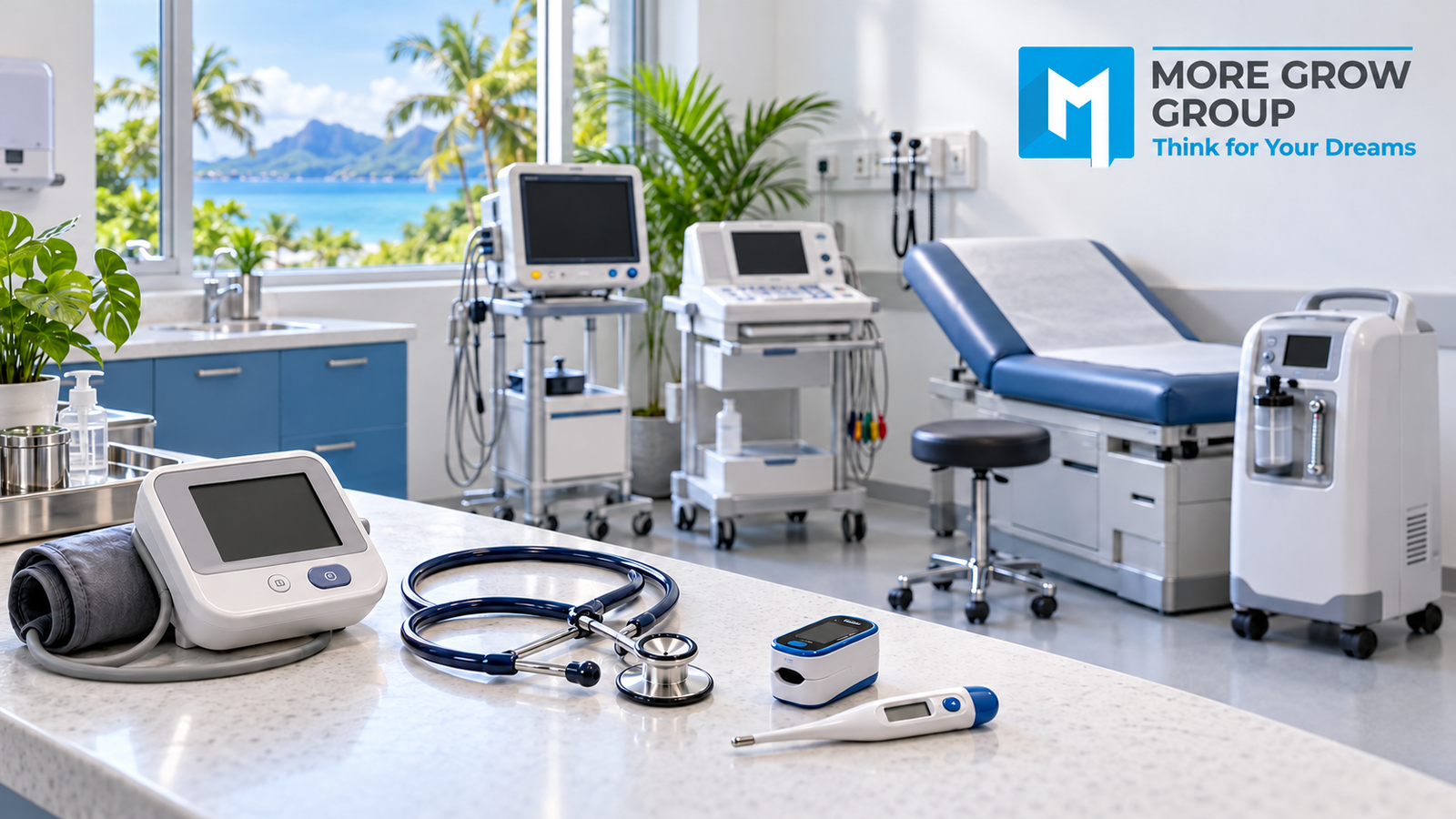
Depending on the service, common items may include:
- Blood pressure monitors with suitable cuff sizes.
- Stethoscopes.
- Clinical thermometers.
- Adult and paediatric weighing scales.
- Height-measuring equipment.
- Examination couches.
- Examination lights.
- Otoscopes and other examination instruments.
Choose devices and accessories that match the patient population. A clinic treating children, for example, needs appropriately sized equipment rather than relying entirely on adult accessories.
Also consider cleaning requirements, accessibility and safe positioning during examinations.
3. Patient Monitoring Equipment
Monitoring requirements depend on the level of care provided.
Equipment may include pulse oximeters, blood pressure devices and, where justified by clinical services, multiparameter patient monitors.
Before purchasing, confirm:
- Which measurements are required.
- Whether the device is suitable for the intended patients.
- Availability of compatible sensors and cuffs.
- Battery operation and charging arrangements.
- Alarm functions where applicable.
- Cleaning and maintenance requirements.
Staff should understand the limitations of the measurements and how to recognise unreliable readings. A displayed result should be interpreted alongside the patient’s clinical assessment.
4. Emergency and Resuscitation Equipment
Facilities need an emergency equipment plan consistent with their services, staffing and referral arrangements.
Depending on the approved clinical scope, this may include:
- An automated external defibrillator or other appropriate defibrillator.
- Bag–valve–mask equipment in suitable sizes.
- Suction equipment.
- Emergency airway accessories.
- An organised emergency trolley.
- Appropriate oxygen delivery equipment.
Clinical leadership should determine the required contents and staff competencies.
Assign responsibility for readiness checks, including batteries, accessories, expiry dates and replacement supplies. Equipment that is present but incomplete or non-functional may not provide the intended emergency capability.
5. Oxygen Supply and Delivery Equipment
Oxygen planning involves the supply source, delivery accessories, monitoring and ongoing support.
Depending on the facility, options may include oxygen cylinders, concentrators or a larger supply system.
Selection should account for clinical demand, power availability, replenishment arrangements and a suitable backup. WHO provides guidance addressing the selection, procurement, use and maintenance of oxygen concentrators and associated delivery products.
Facilities should confirm:
- Required capacity and intended applications.
- Compatible regulators and delivery accessories.
- Patient monitoring arrangements.
- Safe installation and storage.
- Maintenance and performance checks.
- Staff training.
- Contingency arrangements during supply interruptions.
Oxygen should be managed through approved clinical procedures and appropriate safety controls.
6. Diagnostic and Point-of-Care Testing Equipment
Diagnostic equipment should reflect the tests a facility is authorised and equipped to perform.
Examples may include:
- Blood glucose meters.
- Urinalysis equipment.
- ECG machines.
- Selected point-of-care analysers.
- Microscopes and laboratory equipment where appropriate.
A device purchase should include an assessment of quality control, reagents, consumables, storage conditions and staff competence.
For example, a glucose meter requires compatible strips and appropriate quality checks. An analyser may depend on reagents with limited shelf life or specific storage requirements.
Confirm those dependencies before selecting a model.
7. Infection Prevention and Instrument Reprocessing Equipment
Equipment planning should support the facility’s infection prevention procedures.
Requirements may include hand hygiene facilities, suitable cleaning equipment, sharps containers and healthcare waste arrangements.
Where reusable instruments are processed on site, facilities need an appropriate, validated reprocessing system. This may involve cleaning equipment, packaging materials and a suitable steriliser, depending on the instruments and procedures.
Purchasing a steriliser alone does not establish a complete reprocessing capability.
Facilities should assess water and power requirements, workflow, cycle monitoring, maintenance and staff training. Single-use products should be managed according to their intended use.
8. Maternal and Child Health Equipment
Facilities providing maternal and child health services need equipment appropriate to those services.
Examples may include:
- Infant weighing scales.
- Suitable paediatric examination equipment.
- Fetal assessment equipment where clinically appropriate.
- Newborn warming equipment where required.
- Age-appropriate monitoring accessories.
An antenatal consultation service has different requirements from a facility providing deliveries and newborn care.
Select equipment according to the approved service level and ensure staff have the competencies needed to operate it.
9. Refrigeration and Temperature Monitoring
Some medicines, vaccines and diagnostic materials require controlled storage conditions.
Where these products are handled, facilities should select refrigeration and temperature-monitoring arrangements that meet their specific requirements.
Consider:
- The products and storage conditions involved.
- Required capacity.
- Temperature monitoring and records.
- Alarm and escalation arrangements.
- Backup power.
- Alternative storage during equipment failure.
Do not assume that an ordinary domestic refrigerator is suitable for every healthcare application.
Keep responsibilities clear so that temperature problems are investigated and affected products are assessed appropriately.
10. Furniture, Mobility and Supporting Equipment
Clinical equipment also depends on a workable care environment.
Supporting items may include:
- Patient beds and examination couches.
- Wheelchairs and stretchers.
- Instrument and dressing trolleys.
- Secure storage.
- Suitable work surfaces.
- Privacy screens.
Review load ratings, cleaning compatibility, brakes, manoeuvrability and available space.
A trolley or stretcher should fit the routes through which it will be moved. Equipment layout should also allow staff to access patients and carry out routine tasks safely.
11. How Do Power and Location Affect Equipment Selection?
Healthcare facilities in Fiji should assess the conditions at their actual location rather than assuming all sites have the same infrastructure.
Relevant questions include:
- Is electricity sufficiently reliable for the proposed device?
- Does the equipment need backup power?
- Can batteries be replaced locally?
- Are temperature and humidity conditions within specifications?
- Is suitable water available where required?
- How quickly can consumables and spare parts arrive?
- Can technicians reach the facility when repairs are needed?
For facilities where transport or technical access is difficult, serviceability and replacement arrangements deserve particular attention.
12. Why Are Maintenance and Calibration Important?
Equipment needs support after installation.
WHO identifies maintenance, calibration, repair, user training and decommissioning as activities associated with managing medical equipment.
These activities serve different purposes.
Maintenance helps preserve or restore operation. Calibration assesses measurement performance against an appropriate reference. Functional and safety checks address other aspects of device readiness.
Not every device needs the same activities or schedule. Follow manufacturer instructions and establish a risk-based programme with qualified personnel.
Keep records of inspections, servicing, faults, repairs and relevant measurement checks.
Essential Equipment Categories: A Planning Comparison
| Category | Example Equipment | Key Planning Consideration |
| Basic assessment | Blood pressure monitor, thermometer, scales | Patient suitability and measurement performance |
| Monitoring | Pulse oximeter, patient monitor | Compatible accessories and trained users |
| Emergency response | Defibrillator, suction unit, resuscitation equipment | Readiness checks and clinical competencies |
| Oxygen | Concentrator or cylinder system | Supply capacity, safety and backup |
| Diagnostics | ECG machine, glucose meter, selected analyser | Consumables and quality control |
| Reprocessing | Suitable cleaning and sterilisation equipment | Complete validated workflow |
| Cold storage | Appropriate refrigerator and temperature logger | Product-specific conditions and contingency plans |
| Patient support | Examination couch, wheelchair, stretcher | Safe use, cleaning and accessibility |
Each category should be assessed against the facility’s actual services.
What Should Facilities Check Before Purchasing?
A purchasing review should cover the full cost and practical requirements of ownership.
Check:
- Intended use and patient suitability.
- Applicable approvals and documentation.
- Installation and commissioning.
- Included accessories.
- Consumable availability and prices.
- Training arrangements.
- Warranty terms and exclusions.
- Preventive maintenance requirements.
- Spare parts and repair support.
- Expected service life.
- Safe disposal or decommissioning.
A lower purchase price may offer poor value if consumables are unavailable or repairs require long delays.
How Should New Equipment Be Introduced?
Before clinical use, confirm that the delivered equipment matches the order and is ready for its intended application.
A practical process includes:
- Inspect the device and accessories.
- Record the model, serial number and location.
- Complete installation and required acceptance checks.
- Provide user training.
- Confirm cleaning and operating procedures.
- Establish maintenance and consumable arrangements.
- Assign responsibility for reporting faults.
- Retain manuals and service contacts.
The required checks will vary by device. Qualified clinical and technical staff should determine what is necessary.
How Can MoreGrow Group Support an Equipment Enquiry?
When discussing medical equipment requirements with MoreGrow Group, describe the services your facility provides and the problems you need to address.
Provide:
- Facility type and location.
- Patient groups and expected workload.
- Required equipment functions.
- Existing models and accessories.
- Available infrastructure.
- Training needs.
- Consumable requirements.
- Maintenance and response expectations.
Ask MoreGrow Group to confirm available products, specifications, warranty coverage and the support included in its proposal.
Product availability and service coverage should be verified for each enquiry.
Building a Practical Equipment Plan for Fiji Healthcare Facilities
Essential medical equipment should support the care a facility is prepared and authorised to deliver.
A practical plan connects clinical needs with suitable devices, reliable consumables, trained users and ongoing technical support.
For clinics and healthcare facilities in Fiji, considering those requirements before purchasing helps create an equipment inventory that can remain usable and support everyday care.



Leave A Comment