
Introduction
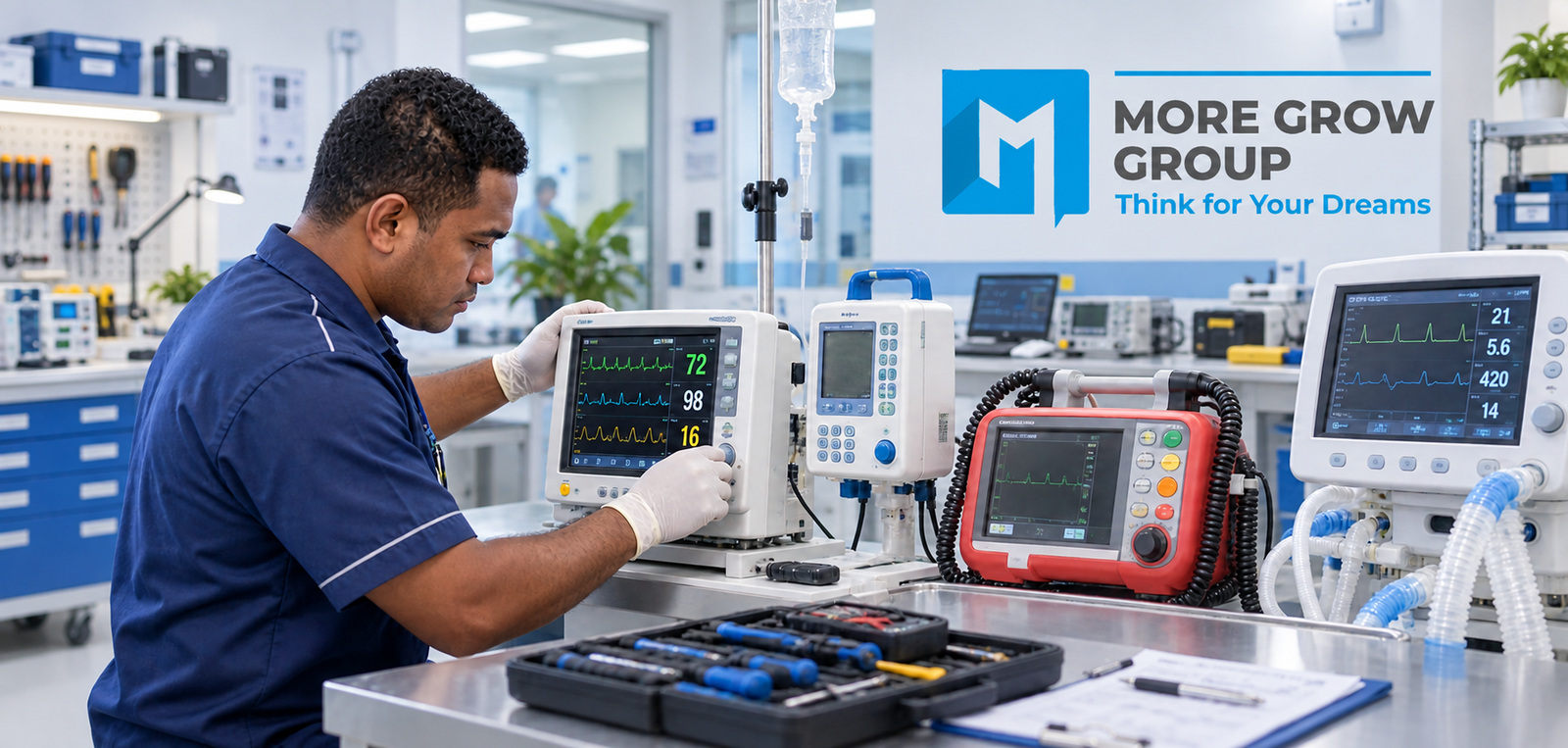
Medical equipment plays an essential role in patient monitoring, diagnosis, treatment, laboratory testing, emergency care, and healthcare delivery.
Hospitals, health centres, clinics, laboratories, dental practices, pharmacies, and community healthcare facilities across Fiji depend on equipment that must operate safely and reliably.
However, medical devices can deteriorate because of repeated use, ageing components, unsuitable storage, accidental damage, electrical problems, transportation, dust, moisture, and environmental conditions.
Fiji’s warm and humid climate, geographical distribution across multiple islands, transportation challenges, and exposure to severe weather can make effective equipment management especially important.
1. What Is Preventive Maintenance of Medical Equipment?
Preventive maintenance is planned servicing performed at predetermined intervals to keep medical equipment in suitable operating condition.
Instead of waiting for equipment to fail, healthcare facilities inspect and service devices before major problems develop.
Preventive maintenance activities may include:
- Visual inspection
- Cleaning
- Functional testing
- Electrical safety checks
- Battery testing
- Lubrication where appropriate
- Replacement of worn components
- Inspection of cables and connectors
- Alarm testing
- Performance verification
- Software or firmware checks
- Calibration where required
- Documentation of completed work
The exact maintenance procedure depends on the equipment type, manufacturer instructions, clinical application, risk level, usage, condition, and service history.
The World Health Organization describes maintenance as an important part of medical-equipment management and provides guidance covering inspection, preventive maintenance, corrective maintenance, inventories, work orders, testing equipment, and technical personnel. WHO Medical Equipment Maintenance Programme Overview
2. Why Is Preventive Maintenance Important?
Medical equipment may continue operating even when internal components are beginning to deteriorate.
A device may appear normal while developing problems such as:
- Weak batteries
- Damaged cables
- Loose electrical connections
- Blocked filters
- Worn seals
- Sensor drift
- Reduced alarm volume
- Unstable power supply
- Damaged accessories
- Inaccurate displays
- Mechanical wear
- Software errors
Preventive maintenance provides an opportunity to identify these problems before they result in complete equipment failure.
Regular maintenance can help healthcare facilities:
- Improve equipment reliability
- Reduce unexpected breakdowns
- Support patient and staff safety
- Maintain dependable performance
- Extend useful equipment life
- Reduce emergency repair costs
- Plan equipment downtime
- Maintain organised service records
- Support quality-management procedures
- Identify equipment requiring replacement
Preventive maintenance is particularly important when a facility has limited access to backup equipment or specialist repair services.
3. Preventive Maintenance vs Corrective Maintenance
Preventive and corrective maintenance serve different purposes.
Preventive maintenance is planned work completed before equipment fails.
Examples include cleaning filters, checking batteries, inspecting cables, testing alarms, and replacing components according to a maintenance schedule.
Corrective maintenance is performed after a fault, breakdown, or performance problem has been identified.
Examples include repairing a damaged power supply, replacing a failed display, correcting an alarm fault, or restoring a device that will not start.
Healthcare facilities need both approaches. However, relying mainly on corrective maintenance can result in:
- Unexpected equipment downtime
- Delayed patient services
- Higher repair costs
- Difficulty obtaining urgent spare parts
- Greater dependence on replacement equipment
- Possible use of unreliable devices
- Reduced equipment life
A preventive approach helps facilities identify manageable problems before they become major failures.
4. Preventive Maintenance vs Calibration
Preventive maintenance and calibration are related but are not the same process.
Preventive maintenance helps maintain the physical and functional condition of equipment through planned inspection, cleaning, servicing, testing, and component replacement.
Calibration compares an instrument’s measurements with an appropriate reference standard to determine whether it is operating within the required accuracy or tolerance.
For example, preventive maintenance of a medical weighing scale may include cleaning, checking the display, inspecting the platform, examining the power supply, and confirming that the controls operate.
Calibration determines whether the scale provides accurate weight measurements.
Completing preventive maintenance does not automatically prove measurement accuracy. Similarly, calibration does not replace the need to inspect, clean, and service the equipment.
Both activities should be coordinated within the facility’s medical-equipment management program.
5. Which Medical Equipment Requires Preventive Maintenance?
Most reusable medical equipment can benefit from planned inspection and maintenance.
Examples include:
- Patient monitors
- ECG machines
- Defibrillators
- Infusion and syringe pumps
- Ventilators
- Anaesthesia machines
- Suction equipment
- Pulse oximeters
- Blood pressure monitors
- Medical weighing scales
- Infant incubators
- Radiology and imaging equipment
- Ultrasound machines
- Laboratory analysers
- Centrifuges
- Microscopes
- Autoclaves and sterilisers
- Vaccine refrigerators
- Temperature data loggers
- Dental equipment
- Audiometers
- Examination lights
- Hospital beds
- Oxygen concentrators
- Medical gas equipment
- Electrical safety testing instruments
The maintenance requirements for each device should be based on its intended purpose, manufacturer instructions, risk classification, frequency of use, and operating environment.
6. How Often Should Preventive Maintenance Be Performed?
There is no single maintenance interval suitable for every medical device.
Some equipment may require monthly or quarterly checks. Other devices may be serviced every six or twelve months.
The appropriate interval depends on:
- Manufacturer recommendations
- Equipment type
- Clinical risk
- Frequency of use
- Age and condition
- Operating environment
- Previous maintenance results
- Failure history
- Availability of backup equipment
- Applicable quality requirements
- Facility procedures
A general maintenance schedule may include:
- Daily checks by equipment users
- Weekly or monthly cleaning and inspection
- Quarterly checks for frequently used or critical equipment
- Six-monthly technical maintenance
- Annual comprehensive preventive maintenance
- Additional servicing following repair, damage, relocation, or unusual performance
These are general examples only. Healthcare facilities should not apply the same interval to every device without considering the equipment’s specific requirements.
7. Factors That Affect Maintenance Frequency
Healthcare facilities in Fiji may face equipment-management challenges that differ according to their location and available resources.
Humidity and Moisture
High humidity can contribute to corrosion, condensation, damaged electronic components, and deterioration of cables or connectors.
Equipment should be stored in clean, dry, and well-ventilated areas according to manufacturer requirements.
Transportation Between Locations
Equipment transported between islands, communities, or healthcare facilities may experience vibration, impact, heat, moisture, and handling risks.
Devices should be inspected after transportation before being returned to clinical service.
Power Quality
Voltage fluctuations, outages, unsuitable extension leads, and inadequate power protection can affect electronic medical equipment.
Facilities should use suitable electrical protection and arrange inspection when power-related damage is suspected.
Severe Weather
Cyclones, flooding, heavy rainfall, and other severe weather events may expose equipment to water, humidity, physical impact, contamination, or extended power loss.
Affected equipment should not automatically be returned to service. It may require professional inspection, electrical safety testing, cleaning, repair, calibration, or replacement.
Access to Spare Parts and Technical Support
Some parts or specialist services may need to be sourced from outside the immediate area.
Maintaining essential spare parts and planning services in advance can help reduce extended downtime.
8. Challenges Affecting Medical Equipment in Fiji
Healthcare facilities in Fiji may face equipment-management challenges that differ according to their location and available resources.
Humidity and Moisture
High humidity can contribute to corrosion, condensation, damaged electronic components, and deterioration of cables or connectors.
Equipment should be stored in clean, dry, and well-ventilated areas according to manufacturer requirements.
Transportation Between Locations
Equipment transported between islands, communities, or healthcare facilities may experience vibration, impact, heat, moisture, and handling risks.
Devices should be inspected after transportation before being returned to clinical service.
Power Quality
Voltage fluctuations, outages, unsuitable extension leads, and inadequate power protection can affect electronic medical equipment.
Facilities should use suitable electrical protection and arrange inspection when power-related damage is suspected.
Severe Weather
Cyclones, flooding, heavy rainfall, and other severe weather events may expose equipment to water, humidity, physical impact, contamination, or extended power loss.
Affected equipment should not automatically be returned to service. It may require professional inspection, electrical safety testing, cleaning, repair, calibration, or replacement.
Access to Spare Parts and Technical Support
Some parts or specialist services may need to be sourced from outside the immediate area.
Maintaining essential spare parts and planning services in advance can help reduce extended downtime.
9. Daily Checks by Medical Equipment Users
Healthcare workers can help identify equipment problems before technical maintenance becomes necessary.
Before using a device, authorised users should check:
- Equipment cleanliness
- Visible physical condition
- Power cord and plug
- Battery charge
- Cables and connectors
- Sensors and probes
- Display operation
- Alarm operation
- Required accessories
- Error messages
- Calibration or maintenance status label
- Previous fault reports
Users should follow the manufacturer’s pre-use instructions and facility procedures.
If a device appears damaged, produces unusual readings, displays an error, or fails a functional check, it should be removed from clinical use and reported through the appropriate process.
10. What Happens During Preventive Maintenance?
A preventive maintenance procedure may include the following steps:
Equipment Identification
The technician confirms the equipment name, manufacturer, model, serial number, asset number, location, and service history.
Visual Inspection
The equipment is examined for:
- Cracks
- Corrosion
- Loose parts
- Damaged cables
- Worn connectors
- Broken switches
- Missing covers
- Fluid contamination
- Damaged labels
- Blocked ventilation openings
Cleaning
External surfaces, ventilation openings, filters, sensors, and accessible components may be cleaned according to manufacturer-approved procedures.
Cleaning should not introduce moisture or chemicals into sensitive components.
Functional Testing
The technician checks whether controls, displays, alarms, indicators, switches, pumps, motors, and other functions operate correctly.
Electrical Safety Testing
Where required, suitable testing may be performed to evaluate protective earth continuity, insulation, leakage current, power cords, plugs, and other electrical safety features.
Battery Assessment
Rechargeable batteries may be inspected and tested for charging performance, capacity, physical damage, leakage, or reduced operating time.
Component Replacement
Filters, seals, batteries, fuses, tubing, cables, lamps, and other service components may be replaced when required.
Only suitable parts should be used.
Performance Verification
The device may be tested using appropriate analysers, simulators, reference instruments, or test loads.
Calibration
If the equipment measures or delivers a quantity, calibration may be completed according to its requirements.
Documentation
All findings, tests, parts, repairs, adjustments, and final results should be recorded.
11. Preventive Maintenance for High-Risk Medical Equipment
High-risk equipment requires careful maintenance planning because failure may directly affect patient treatment or safety.
Examples may include:
- Defibrillators
- Ventilators
- Anaesthesia machines
- Infusion pumps
- Patient monitors
- Neonatal incubators
- Electrosurgical units
- Oxygen equipment
- Emergency suction equipment
Maintenance procedures may need to include detailed functional tests, alarm verification, electrical safety tests, battery-capacity checks, performance testing, and calibration.
Only appropriately trained and authorised personnel should service high-risk equipment.
Healthcare facilities should ensure that suitable backup arrangements are available while critical devices are being maintained.
12. Managing Batteries in Medical Equipment
Battery problems are a common cause of equipment failure.
A battery may appear charged but provide only a short operating period when disconnected from mains power.
A battery-management program should include:
- Checking charging performance
- Inspecting for swelling or leakage
- Testing operating capacity
- Recording replacement dates
- Keeping charging contacts clean
- Following correct storage requirements
- Replacing batteries with suitable approved types
- Testing equipment after battery replacement
- Disposing of damaged batteries safely
Equipment used during emergencies should have its battery condition checked regularly.
Facilities should also confirm that chargers, power adaptors, and backup power supplies are suitable for the device.
13. Cleaning and Infection-Control Considerations
Medical equipment may move between patients, departments, and clinical areas.
Cleaning and disinfection procedures should be coordinated with preventive maintenance activities.
Facilities should:
- Follow manufacturer-approved cleaning instructions
- Use suitable disinfectants
- Avoid excessive liquids
- Protect electrical connections
- Clean sensors and accessories correctly
- Use appropriate personal protective equipment
- Decontaminate equipment before servicing
- Notify technicians about possible contamination
- Document decontamination where required
Harsh chemicals or incorrect cleaning methods can damage plastics, displays, seals, adhesives, sensors, and electronic components.
Clinical cleaning and technical maintenance teams should use compatible procedures.
14. Creating a Medical Equipment Inventory
A complete equipment inventory is the foundation of an effective maintenance program.
The inventory should record:
- Equipment name
- Manufacturer
- Model
- Serial number
- Asset number
- Department and location
- Date purchased
- Date installed
- Supplier details
- Warranty status
- Maintenance frequency
- Last service date
- Next service due date
- Calibration requirements
- Risk level
- Current condition
- Repair history
- Responsible person
- Replacement priority
Every device should have a unique identification number.
The inventory should be updated whenever equipment is purchased, transferred, repaired, retired, donated, lost, or disposed of.
15. Assigning Equipment Risk Levels
Risk classification can help facilities determine which equipment requires the highest maintenance priority.
Factors may include:
- Clinical purpose
- Consequences of failure
- Whether the device supports life
- Frequency of use
- Maintenance complexity
- Failure history
- Availability of replacement equipment
- Required accuracy
- Environmental exposure
A simple classification may include:
- High Risk: Equipment where failure could seriously affect patient treatment or safety
- Medium Risk: Equipment where failure could interrupt diagnosis, monitoring, or routine clinical services
- Low Risk: Equipment with limited clinical consequences if temporarily unavailable
Risk classification should be documented and reviewed when equipment use or circumstances change.
16. Developing a Preventive Maintenance Schedule
Healthcare facilities can create a structured schedule through the following process:
Step 1: List All Equipment
Use the equipment inventory to identify every device requiring maintenance.
Step 2: Review Manufacturer Requirements
Check operation manuals, service manuals, technical notices, and warranty conditions.
Step 3: Assign Risk and Priority
Prioritise life-support, emergency, high-use, and high-risk equipment.
Step 4: Define Maintenance Tasks
Identify the inspection, cleaning, testing, calibration, and replacement tasks required for each device.
Step 5: Establish Service Intervals
Set maintenance intervals based on manufacturer instructions, risk, usage, condition, environment, and service history.
Step 6: Assign Responsibility
Identify who will perform daily checks, technical maintenance, calibration, repairs, record management, and schedule monitoring.
Step 7: Plan Equipment Downtime
Arrange backup equipment or schedule maintenance during lower-use periods.
Step 8: Track Due Dates
Use a spreadsheet, calendar, database, equipment-management system, or reminder process.
Step 9: Review Results
Analyse failures, missed maintenance, repeated repairs, out-of-tolerance results, and spare-parts use.
Step 10: Improve the Schedule
Shorten, extend, or modify intervals when supported by equipment performance, risk assessments, manufacturer guidance, and facility requirements.
17. What Should a Maintenance Record Include?
Every maintenance activity should be documented.
A service record may include:
- Equipment identification
- Department and location
- Maintenance date
- Reason for service
- Condition before maintenance
- Inspection findings
- Tests completed
- Results obtained
- Parts replaced
- Repairs completed
- Adjustments made
- Calibration information
- Technician’s name
- Equipment status
- Next maintenance due date
- Recommendations
- Approval for return to service
Records help facilities understand equipment performance and demonstrate that maintenance activities were completed.
They can also support audits, investigations, budgeting, warranty claims, replacement decisions, and future service planning.
18. Managing Equipment That Fails Maintenance
Equipment that fails inspection, safety testing, functional testing, or calibration should not automatically be returned to clinical use.
The facility should:
- Remove the equipment from service
- Attach a clear “Do Not Use” label
- Record the fault
- Notify the responsible department
- Arrange technical assessment
- Repair or replace the equipment
- Repeat applicable safety and performance tests
- Document the final decision
- Authorise return to service only after requirements are met
If repair is not practical or safe, the device may need to be retired.
Facilities should also investigate whether the failure may have affected previous measurements, treatment, or patient care.
19. Spare Parts and Consumables Management
A preventive maintenance program can be delayed when necessary parts are unavailable.
Facilities should identify important items such as:
- Batteries
- Fuses
- Filters
- Power cords
- Sensors
- Probes
- Patient cables
- Tubing
- Seals
- Lamps
- Connectors
- Printer paper
- Approved lubricants
- Cleaning materials
Stock levels should reflect equipment importance, failure history, supplier lead time, storage requirements, and expiry dates.
Parts should be stored correctly and checked before use.
Using unsuitable or unauthorised components may affect equipment safety and performance.
20. Training Healthcare Workers and Equipment Users
Correct use can reduce avoidable equipment damage.
Healthcare workers should receive training covering:
- Equipment start-up and shutdown
- Pre-use inspection
- Alarm interpretation
- Battery charging
- Cleaning and disinfection
- Safe transportation
- Suitable storage
- Fault reporting
- Actions following damage
- Maintenance and calibration labels
- Equipment limitations
- Emergency procedures
Users should not attempt technical repairs unless they are trained and authorised.
Clear reporting can help maintenance personnel respond before a minor issue becomes a major failure.
21. Planning Maintenance Across Fiji’s Islands and Remote Areas
Healthcare facilities outside major centres may need additional planning because technical support, replacement equipment, and spare parts may not be immediately available.
A practical approach may include:
- Grouping maintenance visits by location
- Maintaining accurate equipment lists
- Identifying high-risk equipment in advance
- Carrying commonly required spare parts
- Providing backup equipment during servicing
- Training local staff in approved daily checks
- Using remote technical support where suitable
- Packaging equipment securely for transportation
- Protecting devices from moisture and impact
- Planning services before cyclone seasons or difficult travel periods
Facilities should avoid delaying maintenance simply because equipment continues to switch on.
Functional operation alone does not confirm that a device is safe, accurate, or reliable.
22. When Should Equipment Receive Unscheduled Maintenance?
Equipment should be assessed before its next scheduled service when:
- It has been dropped
- It has been exposed to water or excessive humidity
- It displays an error message
- It produces unusual or inconsistent readings
- An alarm does not operate correctly
- The battery discharges unusually quickly
- A cable, plug, or connector is damaged
- It makes unusual noises
- It overheats
- A user reports a performance problem
- It has been moved or transported
- It has undergone repair
- The manufacturer issues a safety notice
- Its maintenance history is unknown
Questionable equipment should be clearly identified and removed from clinical use until it has been assessed.
23. Benefits of a Preventive Maintenance Program
A well-managed preventive maintenance program can help Fiji healthcare facilities:
- Improve medical-equipment reliability
- Reduce unexpected breakdowns
- Support safer equipment use
- Maintain dependable clinical services
- Reduce urgent repair requirements
- Extend equipment life
- Improve maintenance budgeting
- Reduce unnecessary replacement
- Maintain accurate service records
- Support quality procedures
- Identify recurring faults
- Improve spare-parts planning
- Prepare for audits and inspections
- Manage donated equipment more effectively
- Make informed replacement decisions
Preventive maintenance can also help facilities identify equipment that is no longer economical, technically supported, or appropriate for continued use.
24. Choosing a Medical Equipment Maintenance Provider in Fiji
When selecting a service provider, healthcare facilities should consider:
- Experience with medical and biomedical equipment
- Trained technical personnel
- Knowledge of manufacturer requirements
- Access to suitable testing instruments
- Electrical safety testing capability
- Calibration capability
- Measurement traceability
- Clear maintenance reports
- Availability of spare parts
- Laboratory and on-site services
- Response time
- Geographic coverage
- Equipment collection and delivery
- Quality-management procedures
- Support for different equipment types
The facility should clearly communicate the equipment details, known faults, maintenance requirements, location, required completion date, and availability of backup devices.
25. How More Grow Group Can Support Healthcare Facilities
For healthcare organisations seeking medical equipment maintenance in Fiji, More Grow Group can support the inspection, testing, calibration, and maintenance planning of a range of medical, biomedical, laboratory, temperature, pressure, electrical, dental, and other measurement equipment.
Professional support can help facilities:
- Identify maintenance requirements
- Plan service schedules
- Complete technical inspections
- Coordinate calibration and maintenance
- Maintain service documentation
- Reduce avoidable equipment downtime
- Improve equipment-management practices
The required service should be confirmed according to the specific equipment, manufacturer instructions, clinical application, condition, and facility requirements.
Conclusion
Preventive maintenance is an important part of responsible medical-equipment management.
It helps Fiji healthcare facilities identify equipment problems before failure, maintain dependable operation, reduce unexpected downtime, and protect valuable medical devices.
An effective program should include a complete equipment inventory, risk-based maintenance schedules, manufacturer instructions, trained personnel, daily user checks, suitable spare parts, clear service records, and procedures for removing unsafe equipment from use.
Preventive maintenance should also be coordinated with calibration, electrical safety testing, corrective repairs, infection-control procedures, and equipment replacement planning.
Fiji healthcare facilities should pay particular attention to humidity, transportation, severe weather, power conditions, remote locations, and access to technical support when planning maintenance.
For organisations seeking preventive maintenance of medical equipment in Fiji, More Grow Group provides maintenance, calibration, and testing support for a range of healthcare and measurement equipment.
A structured preventive maintenance program can help healthcare facilities keep essential equipment available, reliable, and suitable for continued clinical use.






Leave A Comment