
Introduction
Reliable electricity is important for homes, schools, healthcare facilities, farms, community centres, and small businesses. However, remote communities in Fiji may face challenges connecting to a central electricity network because of distance, island geography, difficult terrain, and infrastructure costs.
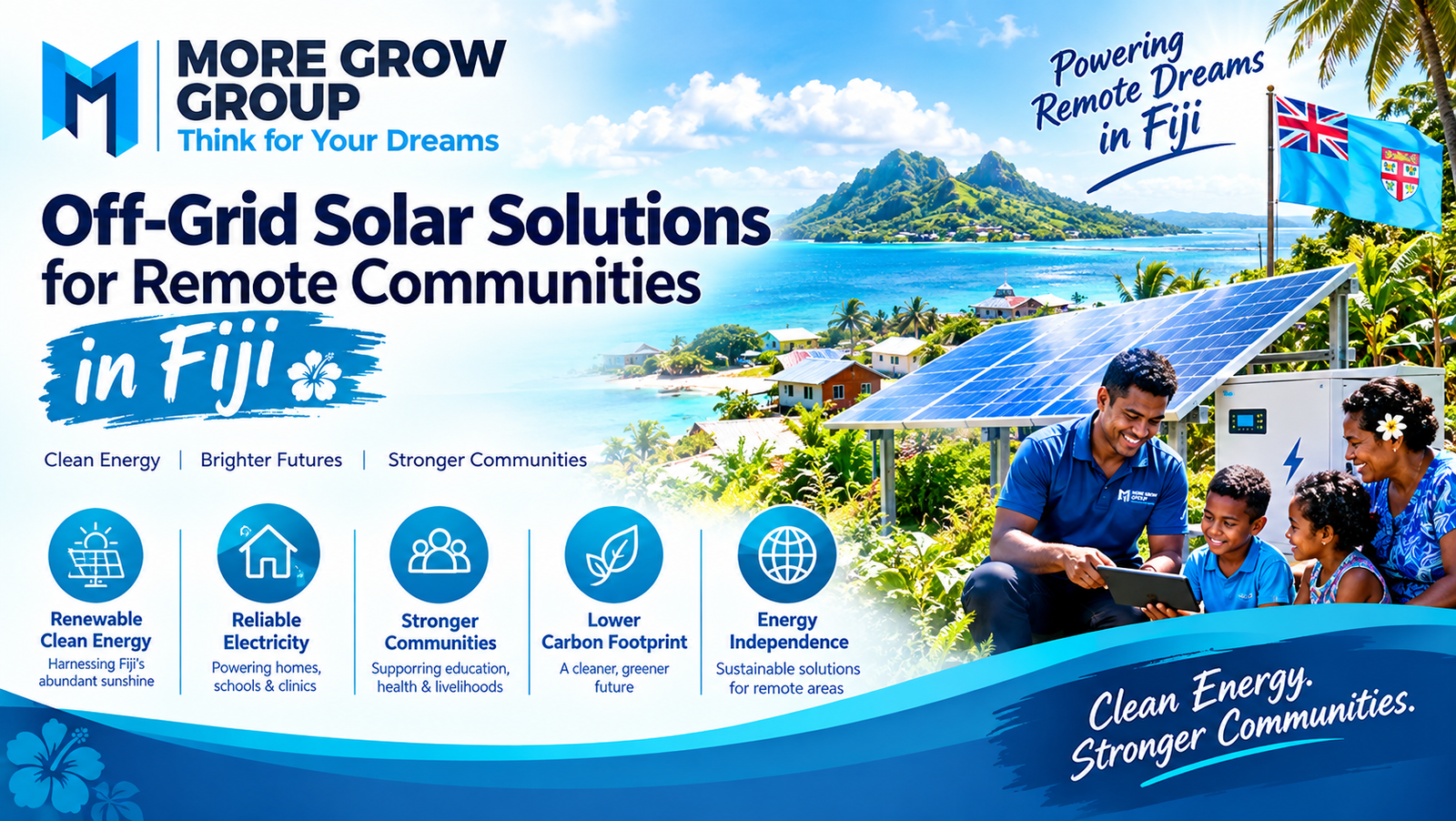
Off-grid solar solutions in Fiji provide an alternative way to generate and store electricity without depending entirely on the national electricity grid. These systems generally combine solar panels, batteries, an inverter, a charge controller, and other electrical components to supply power where conventional grid access is limited or unavailable.
When properly assessed, designed, installed, and maintained, an off-grid solar system can support essential lighting, communication, refrigeration, water pumping, education, healthcare, and community activities.
1. What Is an Off-Grid Solar System?
An off-grid solar system is an independent electricity system that operates without a permanent connection to the central electricity grid.
Solar panels generate electricity from sunlight during the day. The electricity can be used immediately or stored in batteries for use at night, during cloudy weather, or when solar generation is lower than demand.
A typical off-grid solar system may include:
- Solar panels
- Mounting structures
- Battery storage
- Solar charge controller
- Inverter
- Electrical wiring
- Protection devices
- Distribution board
- Energy-monitoring equipment
- Backup generator where required
The size and configuration of the system depend on how much electricity the community requires and when that electricity will be used.
2. Why Are Off-Grid Solar Solutions Important for Remote Communities?
Extending conventional electricity infrastructure to distant islands or isolated rural locations can be technically difficult and expensive.
Off-grid solar systems can generate electricity close to the place where it is needed. This may reduce dependence on long transmission connections and the regular transportation of fuel.
Off-grid solar solutions can help remote communities:
- Access electricity in areas without a grid connection
- Improve household and community lighting
- Support schools and learning facilities
- Power communication equipment
- Operate essential healthcare equipment
- Support water pumping and sanitation systems
- Reduce dependence on fuel-powered generators
- Create opportunities for local businesses
- Improve energy independence
- Support community resilience
Each system should be designed according to the community’s actual electricity requirements, environmental conditions, and maintenance capabilities.
3. Main Components of an Off-Grid Solar System
An off-grid solar system requires several components to generate, store, control, and distribute electricity safely.
Solar Panels
Solar panels convert sunlight into direct-current electricity.
The number and capacity of the panels depend on the required daily energy output, available sunlight, roof or ground space, shading, system losses, and seasonal conditions.
Panels should be positioned and secured appropriately for the site.
Battery Storage
Batteries store electricity generated by the solar panels.
Stored energy can be used during the evening, overnight, or when solar production is insufficient. The battery capacity should be selected according to daily energy consumption, expected backup duration, battery technology, and recommended depth of discharge.
Solar Charge Controller
A charge controller manages the electricity flowing between the solar panels and batteries.
It helps regulate battery charging and can protect the battery system from unsuitable charging conditions.
Inverter
Solar panels and batteries generally provide direct-current electricity. An inverter converts this electricity into alternating current for appliances and equipment designed to operate on AC power.
The inverter must be able to support both normal operating loads and the higher starting power required by some appliances.
Electrical Protection Equipment
Off-grid systems require suitable protection devices, isolation switches, earthing, cabling, enclosures, and distribution equipment.
These components help protect users and equipment from electrical faults. Installation should be completed by appropriately qualified personnel in accordance with applicable requirements.
Energy-Monitoring System
Monitoring equipment can provide information about:
- Solar generation
- Battery charge level
- Energy consumption
- System faults
- Battery condition
- Available power
- Equipment performance
Monitoring helps communities identify unusual performance and manage electricity consumption more effectively.
4. Where Can Off-Grid Solar Power Be Used?
Off-grid solar systems can support a variety of community applications.
Homes and Residential Areas
Household solar systems can provide electricity for lighting, phone charging, fans, televisions, refrigeration, and other essential appliances.
Schools and Education Centres
Solar electricity can support classroom lighting, computers, internet equipment, printers, projectors, and digital learning resources.
Reliable electricity may allow students and teachers to use educational facilities for longer periods.
Healthcare Facilities
Remote clinics may require electricity for lighting, communication, medicine refrigeration, sterilisation equipment, monitoring devices, and other essential healthcare functions.
Healthcare systems should be designed carefully because certain equipment requires stable and reliable electricity.
Water-Pumping Systems
Solar-powered pumps can support water supply, irrigation, livestock, and community sanitation.
The system should be designed according to the water source, pumping height, pipe distance, required daily volume, and storage capacity.
Community Centres
Community buildings may use solar power for lighting, communication, meetings, emergency coordination, and public services.
Small Businesses
Off-grid electricity can support shops, food storage, workshops, tourism activities, agricultural processing, and other small enterprises.
The selected system should match the equipment used by the business.
Telecommunications
Solar systems may provide energy for communication equipment in locations where grid electricity is unavailable or unreliable.
5. Benefits of Off-Grid Solar Solutions
A properly planned off-grid solar system can provide several benefits to remote communities.
Improved Access to Electricity
Off-grid solar systems can deliver electricity to locations where extending the central grid may not be practical.
Reduced Dependence on Fuel
Remote locations may depend on diesel or petrol generators. Transporting fuel to distant communities can be expensive and affected by weather or transport availability.
Solar energy can reduce generator operating time and fuel consumption, although backup generation may still be required for certain applications.
Lower Operating Noise
Solar panels generate electricity without the continuous engine noise associated with fuel-powered generators.
Modular System Design
Solar systems can be designed for individual homes, shared community facilities, or larger mini-grid applications.
Some systems may be expanded later if future demand and system design allow.
Support for Essential Services
Reliable electricity can support healthcare, education, water supply, communication, refrigeration, and emergency services.
Local Energy Independence
Generating power within the community can reduce reliance on distant energy infrastructure and regular fuel deliveries.
6. What Is a Solar Mini-Grid?
A solar mini-grid is a local electricity network that supplies power to multiple users within a defined area.
Instead of installing a completely separate system for every building, a mini-grid may use a central solar array and battery bank to distribute electricity to homes, businesses, and community facilities.
A mini-grid may include:
- Central solar panels
- Shared battery storage
- Inverters
- Local distribution lines
- Individual connection points
- Energy meters
- Protection devices
- Monitoring and control systems
- Backup generation
Mini-grids may be appropriate where homes and facilities are located close enough to share an electricity network.
Their design should account for community demand, distribution losses, safety, metering, ownership, maintenance, and future expansion.
7. Assessing a Community’s Energy Requirements
An accurate energy assessment is necessary before selecting solar panels or batteries.
The assessment should identify:
- Number of homes and buildings
- Appliances and equipment
- Power rating of each appliance
- Daily hours of operation
- Daytime and evening consumption
- Essential and non-essential loads
- Equipment starting requirements
- Expected future demand
- Seasonal energy use
- Required backup duration
- Available installation space
- Possible shading
- Local environmental conditions
If the system is too small, it may not supply enough electricity. If it is significantly oversized, the project may cost more than necessary.
A detailed load assessment helps create a more practical and cost-effective system.
8. Prioritising Essential Electrical Loads
Remote communities may need to prioritise essential services when stored energy is limited.
Essential loads may include:
- Healthcare equipment
- Vaccine or medicine refrigeration
- Emergency lighting
- Communication systems
- Water pumps
- School lighting
- Food refrigeration
- Safety equipment
High-consumption appliances may require additional generation and battery capacity.
Community members should understand which appliances can operate simultaneously and which loads may need to be limited during extended cloudy conditions.
9. Battery Storage for Remote Solar Systems
Battery storage is one of the most important parts of an off-grid system.
Battery selection should consider:
- Required storage capacity
- Battery technology
- Expected service life
- Operating temperature
- Charging requirements
- Depth of discharge
- Replacement availability
- Maintenance requirements
- Transportation conditions
- Disposal or recycling arrangements
- Manufacturer warranty
- Safety requirements
Batteries should be installed in a secure, ventilated, and protected location appropriate to the selected battery type.
Communities should also plan for eventual battery replacement because battery storage does not last indefinitely.
10. Designing for Fiji’s Environmental Conditions
Solar installations in Fiji should be designed for the conditions at their specific location.
Important environmental considerations may include:
- High temperatures
- Humidity
- Heavy rainfall
- Salt-laden air in coastal areas
- Strong winds
- Tropical storms
- Vegetation growth
- Flooding risks
- Insects and animals
- Difficult transport access
Panels, mounting systems, electrical enclosures, wiring, and batteries should be selected and installed with these conditions in mind.
Equipment should be positioned away from avoidable flood risks and protected from corrosion, moisture, and physical damage where practical.
11. The Importance of Professional Installation
Incorrect solar-system installation can create safety hazards, poor performance, equipment damage, and shortened battery life.
A professional system design and installation should consider:
- Electrical load calculations
- Solar-panel capacity
- Battery sizing
- Inverter capacity
- Cable sizing
- Voltage drop
- Earthing
- Electrical protection
- Equipment ventilation
- Weather protection
- Mounting strength
- System testing
- User training
- Technical documentation
Qualified professionals should complete or supervise electrical work according to applicable requirements.
12. Off-Grid Solar System Maintenance
Solar systems require regular inspection and maintenance to operate reliably.
Maintenance activities may include:
- Inspecting solar panels
- Removing dirt, leaves, and other obstructions
- Checking for shading from vegetation
- Examining mounting structures
- Inspecting cables and connectors
- Checking electrical enclosures
- Monitoring battery condition
- Reviewing inverter warnings
- Checking charge-controller operation
- Testing protection equipment
- Reviewing system-performance data
- Recording maintenance work
The maintenance schedule should follow the manufacturer’s recommendations and the needs of the installation.
13. Training Local Community Members
Community training is important for the long-term success of an off-grid solar project.
Selected community members can be trained to:
- Read the monitoring system
- Check battery-charge levels
- Recognise warning indicators
- Manage electricity consumption
- Report faults
- Keep equipment areas clean
- Perform permitted basic inspections
- Maintain operating records
- Contact technical support when required
Training should clearly explain which activities can be completed locally and which require a qualified technician.
Local knowledge and responsibility can help identify problems before they become major failures.
14. Planning for System Ownership and Management
Community solar projects require clear management arrangements.
Before installation, the community and project stakeholders should determine:
- Who owns the system
- Who is responsible for daily operation
- Who approves new electrical connections
- How maintenance will be funded
- How replacement batteries will be purchased
- Who maintains technical records
- How electricity use will be monitored
- Whether users will pay service fees
- How faults will be reported
- Who will arrange professional repairs
A technically suitable system may still experience difficulties if ownership and maintenance responsibilities are unclear.
15. Solar Power and Backup Generation
Some communities may require a hybrid system combining solar panels, batteries, and a backup generator.
Backup generation may be useful when:
- Cloudy conditions continue for several days
- Electricity demand temporarily increases
- Critical equipment requires uninterrupted power
- Batteries need additional charging
- Maintenance affects part of the solar system
- An emergency creates unusual energy demand
A hybrid design can reduce generator operating time while maintaining additional backup capacity.
The generator should be sized and integrated correctly with the solar and battery system.
16. Common Off-Grid Solar Planning Mistakes
Several planning mistakes can reduce the reliability of a community solar project.
Common mistakes include:
- Installing a system without assessing energy demand
- Underestimating evening electricity use
- Selecting insufficient battery capacity
- Ignoring future community growth
- Using unsuitable equipment
- Failing to account for local weather
- Installing panels in shaded locations
- Providing no maintenance plan
- Failing to train local users
- Connecting additional appliances without reviewing capacity
- Keeping incomplete technical records
- Having no budget for replacement components
- Ignoring electrical safety requirements
A structured assessment can help prevent many of these problems.
17. Choosing an Off-Grid Solar Solution Provider
Communities, organisations, and project managers should consider several factors when selecting a solar provider.
These may include:
- Experience with off-grid systems
- Knowledge of remote-site requirements
- Qualified technical personnel
- Detailed load assessment
- Appropriate system design
- Equipment quality
- Battery and inverter options
- Installation standards
- Warranty support
- Maintenance services
- Spare-parts availability
- User training
- Technical documentation
- After-sales support
- Experience working in Fiji’s environment
The provider should clearly explain the system’s capacity, limitations, maintenance requirements, warranties, and expected component-replacement needs.
Maintaining a Reliable Community Solar Program
An off-grid solar project should not be treated as a one-time installation.
Remote communities should establish an ongoing solar-management program that includes:
- Recording the installed equipment
- Keeping manuals and warranties
- Monitoring daily system performance
- Managing electricity demand
- Scheduling inspections
- Maintaining service records
- Reporting faults promptly
- Training responsible community members
- Budgeting for repairs
- Planning for battery replacement
- Reviewing future energy needs
- Arranging professional technical support
A well-managed program can improve system reliability and help protect the community’s investment.
Conclusion
Off-grid solar solutions can provide remote communities in Fiji with access to electricity for homes, schools, healthcare facilities, water systems, communication equipment, and local businesses.
A successful system requires more than solar panels. It needs an accurate energy assessment, suitable battery storage, appropriate electrical protection, professional installation, community training, regular maintenance, and a long-term management plan.
By selecting equipment suitable for the local environment and establishing clear responsibilities for operation and maintenance, communities can improve the reliability and sustainability of their electricity supply.
For communities and organisations exploring off-grid solar solutions in Fiji, More Grow Group can assist with assessing project requirements and identifying suitable energy-system options for remote locations.



Leave A Comment