
Introduction
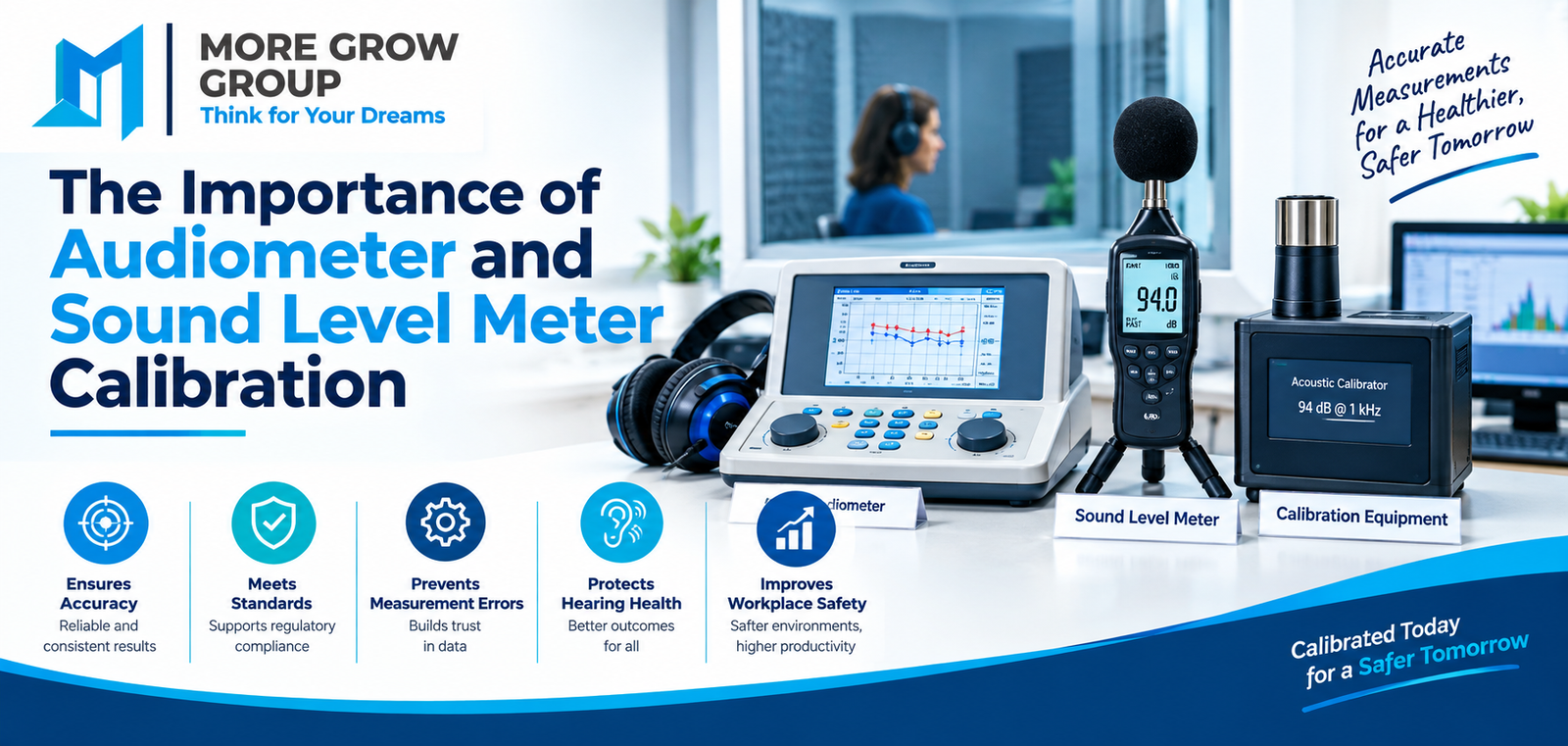
Accurate hearing tests and noise measurements depend on instruments that perform as expected. Audiometers are used to assess hearing, while sound level meters measure noise in places such as workplaces, industrial facilities and public environments.
An instrument can continue to operate even when its measurements have changed. Regular calibration helps identify errors so that audiologists, hearing-test providers and workplace safety professionals can make decisions using dependable results.
1. What Is Audiometer Calibration?
Audiometer calibration checks whether the instrument produces the required test signals accurately. Depending on the equipment and procedure, this may include checking sound levels, frequencies, headphones and other components used during a hearing test.
If an audiometer produces a tone at the wrong level, the test result may not accurately reflect a person’s hearing. Calibration helps identify such problems, while routine checks between calibrations can help users notice faults sooner.
2. What Is Sound Level Meter Calibration?
Sound level meter calibration checks whether a meter measures sound accurately against suitable references. The checks required depend on the meter, its intended use and the applicable procedure.
A sound level meter may also be checked with an acoustic calibrator before and after a measurement session. This field check helps confirm that the instrument is responding as expected during use. It does not replace periodic laboratory calibration.
NATA publishes accreditation scopes that identify laboratories and the specific sound level meter tests they are accredited to perform.
3. Why Does Audiometer Accuracy Matter?
Hearing-test results may be used to assess a person’s hearing, compare results over time or determine whether further assessment is needed.
An inaccurate audiometer can affect the reliability of those results. For example, a change in an instrument’s output could make two tests appear different even when the person’s hearing has not changed in the same way.
Calibration supports consistent testing, but it is only one part of a reliable hearing assessment. The test environment, equipment condition and correct use also matter.
4. Why Does Sound Level Meter Accuracy Matter?
Noise measurements can inform workplace risk assessments and decisions about noise controls. An inaccurate meter may make a noise level appear higher or lower than it is.
Safe Work Australia identifies sound level meters as common instruments for measuring noise and provides guidance on workplace noise and audiometric testing. Reliable measurements help businesses assess conditions and decide whether further action is needed.
5. Where Are These Instruments Used?
Audiometers and sound level meters serve different purposes across a range of settings:
- Hearing clinics: Audiometers help assess and monitor hearing.
- Occupational health programs: Hearing tests may form part of monitoring for workers exposed to noise.
- Manufacturing and construction: Sound level meters help assess noisy activities and equipment.
- Engineering and environmental work: Sound measurements help investigate conditions at a site.
- Research and testing: Both types of instrument may be used where repeatable measurements are important.
The appropriate equipment and test procedure should match the purpose of the measurement.
6. Calibration vs Routine Equipment Checks
Calibration and routine checks work together.
Calibration compares an instrument’s performance with appropriate references and records the results. Routine checks help users identify visible damage, unexpected behaviour or changes in performance between scheduled calibrations.
For an audiometer, routine checks may include inspecting headphones and cables and confirming that test tones can be heard clearly. For a sound level meter, they may include inspecting the microphone and performing a check with a suitable acoustic calibrator.
Passing a routine check does not prove that every part of an instrument remains accurate across its full operating range.
7. What Can Affect Measurement Accuracy?
Several factors can affect an audiometer or sound level meter over time:
- Regular use and ageing components
- Damaged headphones, microphones, cables or connectors
- Impact during transport
- Repairs or replacement parts
- Unsuitable storage conditions
- Changes in the test environment
- Incorrect setup or use
Equipment that is damaged, behaves unexpectedly or fails a routine check should be assessed before further use.
8. How Often Should Calibration Be Performed?
There is no single interval suitable for every instrument or application. The schedule should reflect manufacturer instructions, equipment use, previous calibration results, applicable procedures and the consequences of an inaccurate measurement.
Additional checks may be needed after an instrument has been dropped, repaired or exposed to conditions that could affect its performance.
Businesses and hearing-test providers should record calibration due dates and make sure equipment is assessed before its status becomes uncertain.
9. What Should a Calibration Certificate Include?
A useful calibration certificate should clearly identify the instrument and describe the work performed. Relevant details may include:
- Manufacturer, model and serial number
- Date of calibration
- Measurement points and results
- Reference standards used
- Measurement uncertainty, where applicable
- Any adjustments made
- The instrument’s condition or conformity result, where assessed
The certificate should allow the owner to understand what was tested. If accredited calibration is required, confirm that the provider’s accreditation scope covers the instrument and the measurements you need.
10. Choosing a Calibration Provider in Australia
Before booking a service, provide the calibration company with the instrument’s model, accessories and intended application. Ask whether it can test the required functions and whether headphones, microphones or acoustic calibrators should be supplied with the instrument.
Also confirm the expected documentation, turnaround time and whether accredited calibration is needed for your organisation’s requirements. A provider’s accreditation should be checked against its specific scope of services, not assumed to cover every acoustic instrument.
Conclusion
Audiometer calibration supports dependable hearing-test results. Sound level meter calibration supports dependable noise measurements. Both help organisations detect instrument errors and maintain records they can use when reviewing results over time.
A practical equipment program combines scheduled calibration with routine checks, careful handling and prompt assessment when a fault is suspected. For Australian organisations that rely on hearing or noise measurements, those steps help ensure decisions are based on instruments fit for their intended use.



Leave A Comment