
Introduction
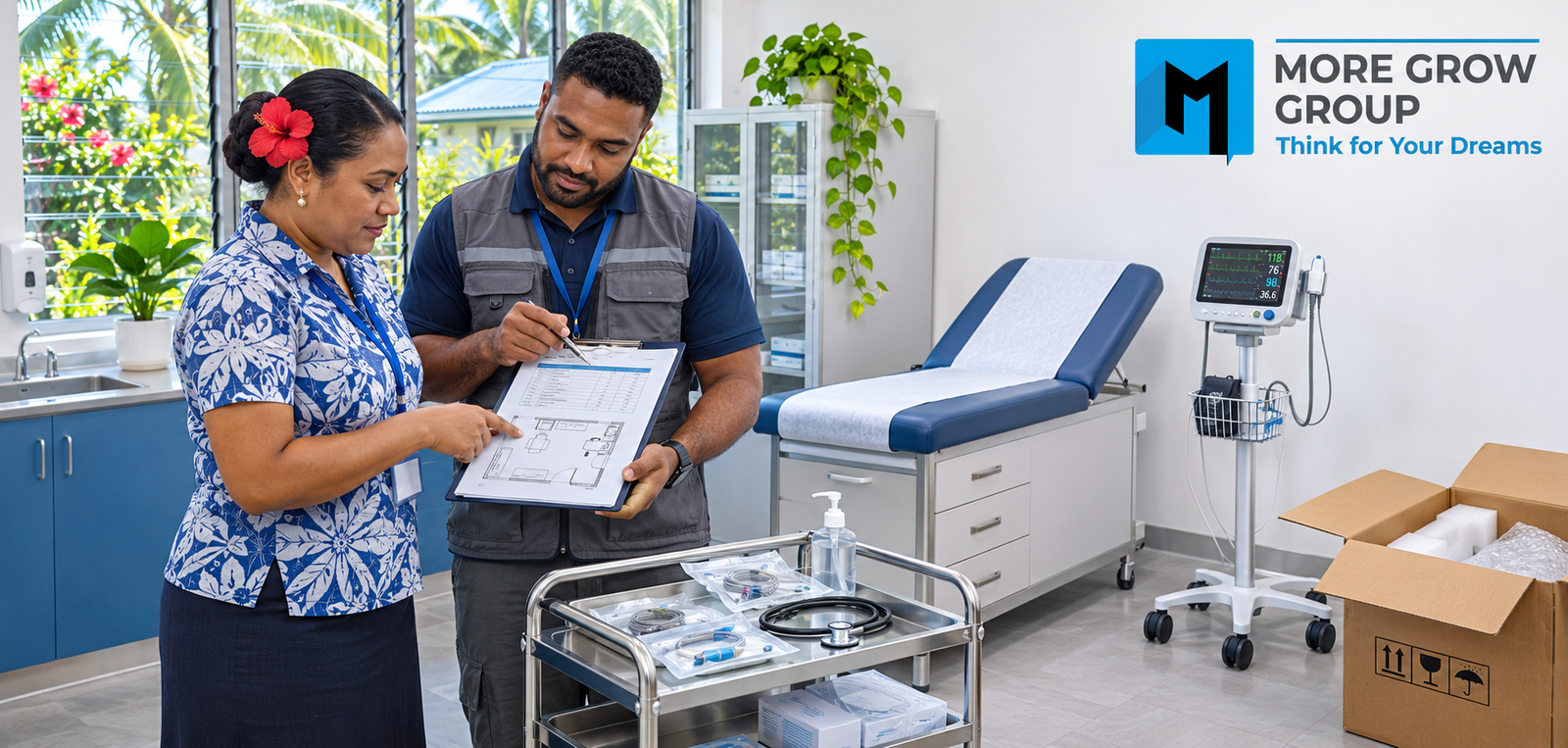
A hospital equipment supplier in Fiji can help a new clinic identify equipment options, but purchasing decisions need to begin with the services the clinic plans to provide.
Choosing equipment involves more than comparing catalogue prices. Each item needs to suit the intended clinical application, available space, staff capabilities and arrangements for ongoing support.
A clinic opening with consultation rooms may have different requirements from a facility planning diagnostic services or minor procedures. The purchasing team should work with clinical and technical reviewers to define those requirements before requesting quotations.
For organisations considering More Grow Group Fiji, prepare a prioritised equipment list and clinic readiness information before discussing your requirements. Ask the team to confirm product availability, installation arrangements and support coverage for the proposed location.
1. Define the Clinical Services the Equipment Will Support
Begin with the clinic’s approved service plan. Identify which activities will be available at opening and which may be introduced later.
Have the responsible clinical team determine the equipment capabilities needed for those services. This gives procurement staff a clear basis for comparing offers.
<h3> Planning Details to Include </h3>
- Services planned for the opening phase.
• Intended patient groups.
• Expected workload and operating hours.
• Procedures and assessments the clinic will provide.
• Staff roles and relevant competencies.
• Services that will remain outside the clinic’s scope.
• Planned expansion stages.
Avoid selecting equipment solely because it appears in another clinic’s inventory. Confirm why each item is needed in your facility.
2. Create a Prioritised Equipment List
Separate equipment required before opening from items that can be purchased later. Include the accessories and supporting items needed to make each device usable.
Assign a reviewer to each equipment category so purchasing questions reach the right person.
<h3> Equipment List Details to Record </h3>
- Equipment description and intended purpose.
• Required quantity.
• Proposed room or department.
• Essential technical requirements.
• Required accessories and consumables.
• Priority and required delivery date.
• Clinical and technical reviewers.
Record the reason for each priority. A device should not be considered ready merely because its main unit has arrived.
3. Prepare Technical Specifications Before Comparing Models
Describe the functions and performance the clinic requires before selecting a manufacturer or model. This helps suppliers propose equipment against the same requirements.
WHO identifies technical specifications as a basis for purchasing medical equipment, planning maintenance and arranging staff training. who.int
<h3> Specification Details to Review </h3>
- Intended use.
• Required functions and performance.
• Appropriate operating ranges and capacity.
• Patient groups the device must support.
• Physical dimensions and portability needs.
• Required accessories and interfaces.
• Environmental and utility requirements.
• Documentation and support expectations.
Ask suppliers to identify any deviation from the specification rather than assuming every quoted model meets it.
4. Check Whether the Clinic Space Is Suitable
Review the proposed installation location before ordering. Equipment dimensions alone do not establish whether staff can operate, clean and maintain it in the available space.
Share room layouts and access information with the supplier and the clinic’s technical reviewers.
<h3> Site Details to Check </h3>
- Room dimensions and equipment placement.
• Doorways, corridors and delivery access.
• Space for operators and patient movement.
• Access for cleaning and maintenance.
• Storage for accessories and supplies.
• Manufacturer-specified environmental conditions.
• Any installation work required before delivery.
Resolve site limitations before confirming a model that depends on changes to the building.
5. Confirm Power, Utilities and Backup Requirement
Ask for the manufacturer’s utility specifications and have qualified personnel assess the site against them.
Depending on the device, requirements may include electrical supply, ventilation, water, drainage, medical gases or network connections. WHO’s equipment management guidance highlights site preparation and utility checks as part of installation planning. iris.who.int
<h3> Utility Questions to Resolve </h3>
- What electrical supply and connections are required?
• Is electrical work needed before installation?
• Does the device require water, drainage or ventilation?
• Are medical gas connections relevant?
• What network access is required?
• What continuity arrangements are needed during interruptions?
Have the clinical and technical teams determine backup needs according to the equipment’s role and manufacturer guidance.
6. Verify Exactly What the Quotation Includes
A quotation may cover the main device while excluding accessories, installation or training. Request an itemised offer so the clinic can compare complete packages.
Check quantities and product codes, especially when different accessory sizes or configurations are available.
<h3> Quotation Details to Distinguish </h3>
- Manufacturer, model and configuration.
• Quantity of each device.
• Included accessories.
• Starter consumables.
• Delivery and handling.
• Installation and commissioning.
• User training.
• Warranty and service inclusions.
Ask the supplier to identify exclusions explicitly and quote any necessary additional items separately.
7. Review Consumable and Accessory Availability
Check what the clinic will need to replenish during routine operation. A device may be difficult to use consistently if compatible supplies are unavailable or require long lead times.
Confirm compatibility using manufacturer information rather than relying on appearance.
<h3> Supply Questions May Include </h3>
- Which consumables are required for routine use?
• Which items are single-use or reusable?
• What compatible accessories are available?
• Are supplies stocked or ordered on request?
• What minimum quantities apply?
• What shelf life and storage conditions apply?
• How much opening stock is appropriate for the planned workload?
Include recurring supply costs in the purchasing comparison.
8. Establish Cleaning and Reprocessing Arrangements
Give the clinic’s infection prevention team the manufacturer’s cleaning and reprocessing instructions before purchasing.
Confirm that the facility has the appropriate processes, supplies and staff capabilities for the equipment and accessories being considered.
Conditions to Discuss
- Approved cleaning products and methods.
• Instructions for reusable accessories.
• Single-use components and replacement needs.
• Required reprocessing facilities, where applicable.
• Storage after cleaning or reprocessing.
• Staff training and assigned responsibilities.
Resolve any mismatch between manufacturer instructions and the clinic’s available facilities before approving the purchase.
9. Request Product and Supporting Documentation
Ask the responsible technical and regulatory reviewers to identify the documents needed for the proposed equipment.
Check that the documents apply to the exact manufacturer, model and configuration offered. A general brochure should not replace model-specific information.
Useful Records Include
- Product specifications and operating instructions.
• Manufacturer and model identification.
• Relevant conformity and quality documentation.
• Installation requirements.
• Cleaning and maintenance instructions.
• Warranty terms.
• Available service documentation.
• Any documents required by the clinic’s local reviewers.
Have the appropriate local team confirm applicable Fiji requirements before purchase. Overseas documentation alone should not be treated as confirmation of local acceptance.
10. Confirm Delivery, Installation and Commissioning Arrangements
Agree who will deliver, unpack, install and check the equipment. Establish which activities are included and what the clinic must complete beforehand.
Set delivery dates around site readiness rather than arranging for equipment to arrive before suitable storage or installation space is available.
Installation Information to Provide
- Clinic address and responsible contact.
• Equipment list and intended room locations.
• Delivery access and unloading arrangements.
• Site preparation status.
• Available utilities.
• Proposed installation dates.
• Required checks and handover records.
Confirm who can approve completion and how unresolved installation issues will be documented.
11. Include Transport and Location Details Within Fiji
Discuss the complete delivery route to the clinic. Where a site requires additional road, sea or other transport, clarify each handover and the arrangements for protecting the equipment.
Service access should also be considered alongside initial delivery.
Logistics Questions to Resolve
- Who is responsible for each transport stage?
• Does the quotation cover delivery to the clinic or another collection point?
• What packaging and handling conditions apply?
• Who checks the shipment for damage or missing items?
• How will delays be communicated?
• What travel or freight arrangements apply to future servicing?
Record the expected delivery date separately from the date the equipment is expected to be ready for clinical use.
12. Compare the Total Cost of Ownership
Compare costs over an agreed planning period rather than using the purchase price alone. Include the expenses needed to install, operate and support the equipment.
Keep assumptions visible when workload, consumable usage or future service charges remain estimates.
Cost Information to Review
- Equipment and accessory prices.
• Freight, handling and applicable import-related costs.
• Site preparation and installation.
• Initial and refresher training.
• Consumables and replacement accessories.
• Software subscriptions or licences, where applicable.
• Preventive maintenance and required testing.
• Repairs, spare parts and service travel.
Compare offers on the same scope so an apparently lower price does not conceal essential exclusions.
13. Review Warranty and Maintenance Support
Ask who will provide support after installation and which work can be completed at the clinic.
Check the warranty start date and the process for reporting faults. Keep warranty coverage separate from any optional maintenance agreement.
Information to Discuss
- Warranty duration and commencement date.
• Covered parts, labour and travel.
• Exclusions and customer responsibilities.
• Local or visiting technical support arrangements.
• Spare-part availability and ordering lead times.
• Onsite versus return-to-service-centre repairs.
• Preventive maintenance requirements.
• Response arrangements and any replacement options.
Request written terms rather than relying on a general statement that support is available.
14. Agree on Staff Training, Updates and Escalation
Plan training for the people who will operate and manage the equipment. Include staff from relevant shifts and identify how new employees will be trained later.
WHO’s equipment management framework includes inventory, user training and maintenance after equipment is received. who.int
Responsibilities to Allocate
- Attend and record initial training.
• Maintain access to operating instructions.
• Complete manufacturer-required routine checks.
• Report faults and remove equipment from use when required.
• Coordinate refresher training.
• Maintain equipment records.
• Escalate unresolved technical or safety concerns.
Agree how the supplier will communicate relevant product updates and who at the clinic will receive them.
15. Define Acceptance and Release-for-Use Requirements
Agree on acceptance criteria before delivery. Have the appropriate clinical and technical personnel confirm that the supplied equipment matches the order and is ready for its intended use.
Not every device requires the same tests. Identify installation, functional, safety, calibration or other checks according to the equipment and applicable requirements.
Completion Details to Review
- Correct manufacturer, model and quantity received.
• Serial numbers and asset identification recorded.
• Accessories and documents supplied.
• Installation completed.
• Required checks completed and reviewed.
• Staff training documented.
• Open defects or limitations recorded.
• Authorised release-for-use decision.
Add approved equipment to the clinic’s inventory and maintenance schedule before routine use.
A Practical New Clinic Equipment Purchasing Checklist
| Review area | What to confirm |
| Clinical purpose | Services and patient groups the equipment will support |
| Priority | Required before opening or suitable for a later phase |
| Specification | Functions, performance and configuration |
| Site suitability | Space, access and operating environment |
| Utilities | Power and other manufacturer-specified requirements |
| Quotation | Main unit, accessories and exclusions |
| Consumables | Compatibility, availability and recurring cost |
| Cleaning | Manufacturer instructions and clinic capability |
| Documentation | Model-specific records and local review |
| Installation | Responsibilities, preparation and completion checks |
| Logistics | Delivery route, handling and receipt inspection |
| Cost | Purchase and ongoing ownership expenses |
| Support | Warranty, maintenance and spare parts |
| Training | Staff preparation and refresher arrangements |
| Acceptance | Documented checks and approval for use |
Hypothetical Example: Purchasing Equipment for a New Fiji Clinic
A new clinic in Fiji plans to open consultation rooms and introduce additional services later. The purchasing team receives quotations that include different accessory packages and support arrangements.
During the review, staff discover that one offer excludes installation and another requires consumables that have not yet been included in the operating budget.
The Improved Purchasing Plan May Include
- Confirming opening-day requirements with the clinical team.
• Separating essential equipment from later purchases.
• Requesting comparable, itemised quotations.
• Checking room readiness before confirming delivery.
• Adding consumables and maintenance to the budget.
• Scheduling installation and staff training before opening.
• Recording acceptance decisions for each device.
The clinic can then compare complete proposals and see which items still need clarification.
What Should Be Included in an Equipment Supply Proposal?
An equipment supply proposal should connect the offered products with the clinic’s specifications, location and opening schedule.
Ask the supplier to identify confirmed arrangements and any details that remain subject to site assessment or manufacturer confirmation.
Request Written Details Of
- Manufacturer, model, configuration and quantity.
• Compliance with the requested specification and any deviations.
• Included accessories and consumables.
• Delivery, installation and commissioning scope.
• Training arrangements.
• Warranty and ongoing support terms.
• Pricing, exclusions and payment milestones.
• Acceptance and handover arrangements.
Share the proposal with clinical, technical and procurement reviewers before confirming the order.
Common Clinic Equipment Purchasing Mistakes to Avoid
- Buying before defining the clinic’s services.
• Comparing prices for different configurations.
• Overlooking essential accessories or consumables.
• Ordering equipment before checking site readiness.
• Assuming every device requires the same maintenance or calibration.
• Accepting verbal support promises without written terms.
• Scheduling training after equipment is already in routine use.
• Treating delivery as approval for clinical use.
Keep outstanding questions visible until the responsible reviewer has resolved them.
Discussing Equipment Requirements With More Grow Group Fiji
If you are comparing a hospital equipment supplier in Fiji, share your prioritised clinic equipment list with More Grow Group Fiji. Explain the services planned for opening and identify the dates by which equipment needs to be installed and ready.
Information to Share Includes
- Clinic location and planned services.
• Equipment specifications and quantities.
• Room layouts and site readiness details.
• Required accessories and expected consumable needs.
• Delivery, installation and training expectations.
• Documentation and acceptance requirements.
• Warranty and maintenance support needs.
Ask the team to confirm available products, service coverage and proposal inclusions before placing an order.
Keeping New Clinic Equipment Purchasing on Track
Use one equipment list that connects each purchase with its clinical purpose, specification, location and responsible reviewer. Compare complete packages, including consumables, installation, training and ongoing support.
Before routine use, complete the agreed acceptance checks and record the approval. Maintain the equipment inventory and service arrangements as the clinic begins operating.





Leave A Comment