
Introduction
Equipment calibration services in Fiji help organisations assess the measuring instruments they use for testing, inspection and routine operations.
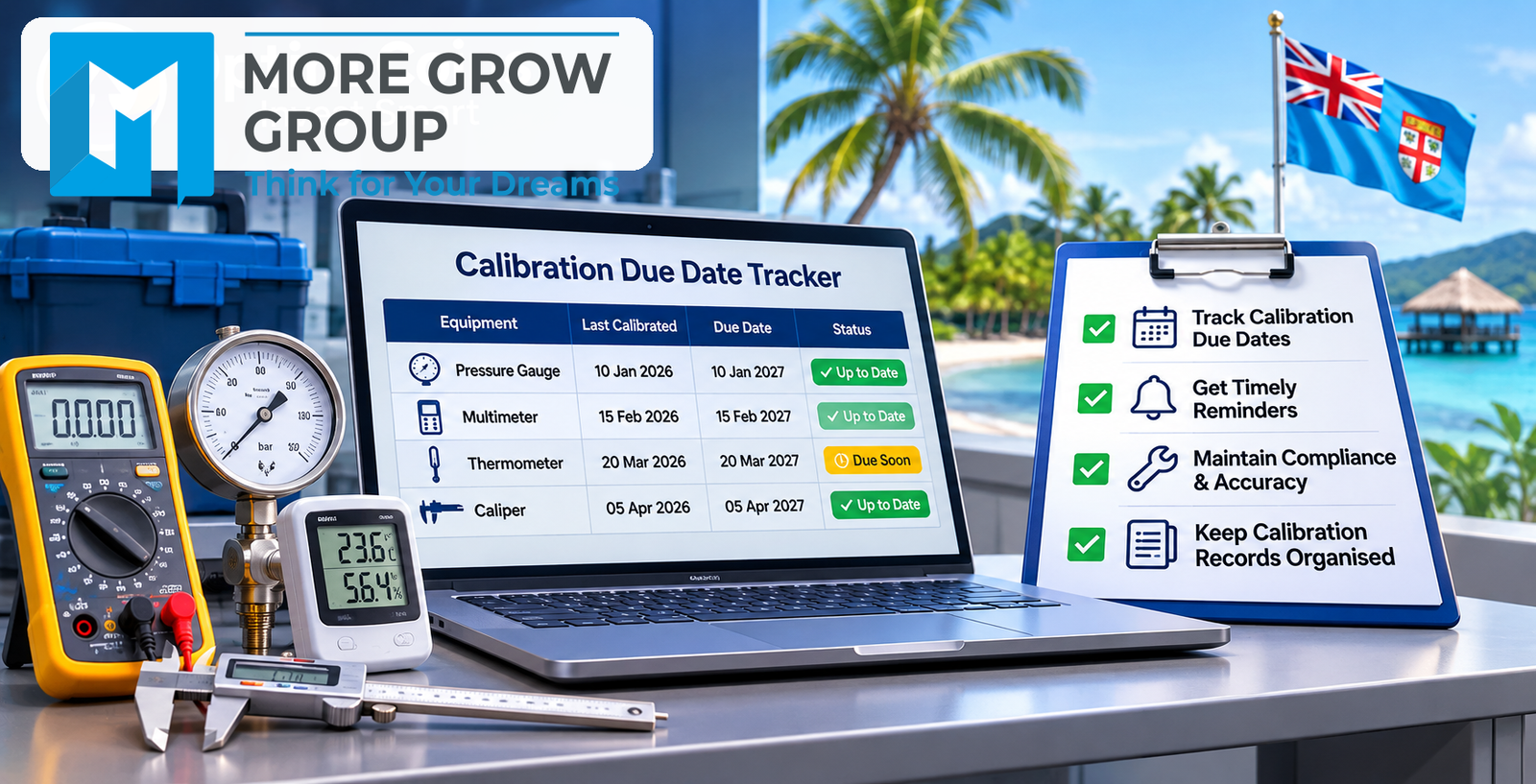
Keeping track of calibration due dates involves more than checking an equipment label. Instruments can move between departments, return from service with a new certificate or sit in storage for months. A current register helps staff see which equipment is due, which items are booked and which are available for use.
A business with one workshop may be able to review its instruments in a single session. An organisation with several sites may need to coordinate different owners, transport arrangements and service dates.
For organisations considering More Grow Group Fiji, prepare a list of instruments, locations and due dates before discussing your requirements. Ask the team to confirm the available calibration scope and turnaround for each site.
1. Create a Central Calibration Register
Begin with a single register for all instruments that require calibration. A shared spreadsheet can suit a small inventory, while an asset management system may be useful when several departments update the records.
<h3> Register Details to Include </h3>
- Equipment description, manufacturer and model.
- Serial number and internal asset ID.
- Current location and responsible department.
- Date of last calibration and next due date.
- Approved calibration interval.
- Equipment status and certificate reference.
- Name or role of the equipment owner.
Give each instrument its own entry, even when you have several units of the same model.
2. Match Each Register Entry to the Physical Instrument
Check the asset ID and serial number against the physical instrument. Similar-looking instruments can be swapped between work areas, particularly when teams share portable equipment or spares.
<h3> Identification Details to Check </h3>
- The asset ID on the instrument matches the register.
- The serial number matches the calibration certificate.
- The recorded location reflects where the instrument is held.
- Relevant probes, sensors or channels are identified.
- The equipment label is readable and accessible.
If a label is missing or unreadable, confirm the instrument’s identity before linking it to a certificate or updating its due date.
3. Confirm How the Next Due Date Is Set
Check which date your organisation uses to calculate the next due date. The date the work was performed, the date the certificate was issued and the date the instrument returned to site can differ.
<h3> Information to Review </h3>
- The date the calibration was performed.
- The approved interval for the instrument.
- Manufacturer guidance and relevant site or customer requirements.
- Any limitations or follow-up actions identified during report review.
- The person authorised to approve the date or change the interval.
For example, if your procedure sets a 12-month interval from calibration performed on 14 April, the next due date is 14 April the following year. Record the calculation in the register so another person can verify it.
4. Assign an Owner for Each Instrument
Give each instrument a named owner or responsible role. This person coordinates calibration bookings and keeps the register accurate when equipment moves or a service date changes.
<h3> Responsibilities to Confirm </h3>
- Review upcoming due dates.
- Confirm the equipment’s location and availability.
- Request quotations and arrange bookings.
- Coordinate with the people who use the equipment.
- Follow up on delayed returns or missing certificates.
- Update the register after the results are reviewed.
Assign a backup contact to handle reminders and bookings when the usual owner is away.
5. Set Reminders With Enough Time to Act
Work backwards from the due date. Allow time to locate the instrument, request a quote, arrange transport if needed and review the results before the equipment goes back into use.
<h3> Reminder Stages to Consider </h3>
- Send an initial reminder to confirm the asset list and service scope.
- Set a booking reminder to confirm the appointment or dispatch date.
- Schedule a preparation reminder for accessories, paperwork and any replacement equipment.
- Escalate the booking if the work may extend beyond the due date.
Set the reminder window for each instrument or group of instruments. Equipment that requires freight or specialist scheduling may need an earlier reminder than equipment with a readily available service slot.
6. Check What Each Equipment Status Means
A due date shows when calibration is required. A status shows whether the instrument is available and what action is pending. Keep service progress and use restrictions visible so staff can see both at a glance.
<h3> Status Details to Distinguish </h3>
- Current — Approved for use under the site procedure.
- Due soon — Within the organisation’s reminder window.
- Booked — Service confirmed for a specific date.
- Away for calibration — Handed over or dispatched to the provider.
- Awaiting report review — Calibration completed and review pending.
- Restricted or overdue — Follow the site procedure before further use.
- In storage or retired — Managed under the organisation’s rules for inactive equipment.
Apply the same definitions across departments so teams interpret the register consistently.
7. Review Equipment Priority and Replacement Availability
Two instruments due in the same week may need different booking dates. One may have a suitable spare, while the other may be needed for a scheduled inspection and require a longer service window.
<h3> Priority Questions May Include </h3>
- Which work depends on this instrument’s readings?
- Does the instrument serve more than one team or shift?
- Is a suitable replacement available?
- Can calibration be scheduled during a maintenance window?
- Will access, travel or freight affect the turnaround?
- Are several instruments of the same type due at once?
Use these answers to decide which instruments to book first while meeting the applicable due dates.
8. Establish How Operational Disruption Will Be Managed
Coordinate the booking with the people who use the equipment. Include preparation, transport, calibration, return and report review when estimating how long an instrument will be unavailable.
Conditions to Discuss
- Dates when the equipment is needed for routine work or inspections.
- Whether bookings can be staggered across teams.
- Availability of a suitable replacement for the full period.
- Responsibility for removal and reinstallation, where required.
- The contingency arrangement if the return date changes.
If you assign a spare, record its asset ID and the period it will cover.
9. Keep Existing Certificates and Documentation Accessible
Link each calibration certificate to the instrument’s register entry. Previous records help staff check the last calibration date, review earlier results or understand why the interval changed.
Useful Records Include
- Current and previous calibration certificates.
- Service and repair records.
- Approved changes to calibration intervals.
- Notes on measurement ranges, limitations or restrictions.
- Records of relevant checks between calibrations.
- Return-to-use approvals and open follow-up actions.
Use a consistent file name that includes the asset ID and calibration date so staff can find the correct report.
10. Confirm Onsite and Offsite Calibration Arrangements
Ask the provider which instruments it can assess onsite and which may need to be sent away. Confirm the service location and booking date before updating the schedule.
Onsite Information to Provide
- Site location and responsible contact.
- Instrument list with asset IDs and serial numbers.
- Where the instruments are installed or stored.
- Required measurement functions, ranges and points.
- Site access windows and preparation requirements.
- Expected reporting and handover arrangements.
For offsite work, agree who will prepare, pack and transport the instruments. Record which accessories are sent with each asset.
11. Include Transport and Location Details Within Fiji
Review service arrangements for each location separately. A branch that relies on scheduled collection or freight may need more lead time than the main facility.
Logistics Questions to Resolve
- Where is each instrument currently held?
- Who will prepare it for dispatch or collection?
- What transport dates are available?
- How will the instrument and its accessories be tracked in transit?
- Who will confirm receipt and check the returned equipment?
- How much time should the schedule allow for delays?
Record the expected return date separately from the calibration due date so users can see when the instrument is likely to be available.
12. Compare Service Costs and Booking Options
Compare the cost and timing of grouping instruments into one booking with sending them in stages. Grouping may reduce the number of trips, while staggering can keep enough equipment available for routine work.
Cost Information to Review
- Calibration charges by instrument and agreed scope.
- Onsite attendance, collection or freight charges.
- Additional reporting or handling costs.
- The cost of providing a replacement during downtime.
- How extra work, such as adjustment or repair, will be quoted and approved.
Confirm the expected downtime for each option before choosing a booking arrangement.
13. Review Responsibilities for Overdue Equipment
Agree who receives an alert when an instrument becomes overdue or a booking may miss the due date. Follow the site procedure to determine the equipment’s status and what action the team needs to take.
Information to Discuss
- Who can restrict equipment use and update its status.
- How users will be informed.
- Whether an approved replacement is available.
- Who reviews any measurements made after the due date.
- What evidence is required before the instrument can return to use.
Record the action taken, the person responsible and the date of the next review.
14. Agree on Updates, Follow-Up and Escalation
Moves, repairs and changes in use can affect the equipment record. Ask staff to report changes as they happen so the right person receives reminders and can locate the instrument when needed.
Responsibilities to Allocate
- Update the location and owner when equipment moves.
- Record changes to probes, sensors or associated components.
- Report repairs, damage or changes in the measurement application.
- Update the register when equipment goes into storage or is retired.
- Record any approved change to the interval or due date.
- Escalate missing equipment, overdue actions or unresolved certificate queries.
When an instrument comes out of storage, confirm its status and complete any checks required by the site procedure before making it available.
15. Define Report Review and Return-to-Use Requirements
When calibration is complete, match the report to the instrument and check whether the results cover its intended use. Record the review outcome before marking the equipment as current.
Completion Details to Review
- Asset ID, serial number and associated components.
- Calibration date and certificate reference.
- Measurement functions, ranges and points covered.
- Results, reported uncertainty and relevant limitations.
- Adjustments, repairs or follow-up actions.
- Return-to-use decision, approved interval and next due date.
Update the register and equipment label together so users see consistent information.
A Practical Calibration Due Date Tracking Checklist
| Review area | What to confirm |
| Equipment identity | Asset ID, serial number and associated components |
| Location | Current site, department or storage area |
| Ownership | Responsible person and backup contact |
| Last calibration | Date the calibration was performed |
| Next due date | Approved date and how it was calculated |
| Reminders | Enough notice for preparation, booking and transport |
| Priority | Operational impact and availability of a suitable spare |
| Scope | Required measurement functions, ranges and points |
| Booking | Confirmed service date and location |
| Logistics | Dispatch, collection and expected return |
| Cost | Calibration, transport and any additional work |
| Overdue equipment | Use restrictions, escalation and follow-up |
| Records | Certificates linked to the correct instrument |
| Equipment changes | Moves, repairs, storage and retirement |
| Return to use | Reviewed results, recorded decision and updated label |
Hypothetical Example: Tracking Calibration Across Two Fiji Sites
A Fiji business uses weighing scales at its main facility and a smaller branch. Several scales are due for calibration in the same month. The branch has one scale, while the main facility has a suitable spare.
During its register review, the team discovers that one scale moved departments without a location update. The team confirms the asset ID, corrects the register and assigns a contact at each site.
The Improved Schedule May Include
- Booking the branch scale first to allow extra time for collection and return.
- Sending a spare to the branch after confirming its suitability and calibration status.
- Staggering the main facility’s bookings so a scale remains available.
- Tracking each instrument under its own asset ID and service reference.
- Reviewing each certificate before updating the status and next due date.
Both sites can use the register to see which scales are available, which are away and which still need a report review.
What Should Be Included in a Calibration Service Proposal?
A calibration service proposal should connect the requested work with the instruments, sites and dates in your register. Include the due date for each instrument and highlight any item needed before a scheduled inspection or production run.
Request Written Details Of
- The instruments and measurement functions included in the service.
- The proposed service location and booking date.
- Expected turnaround and certificate availability.
- Any preparation, packaging or access requirements.
- Applicable exclusions and how additional work will be approved.
- How the provider will communicate a change in timing.
Add the confirmed arrangements to the register and share them with the equipment owners.
Common Calibration Due Date Tracking Mistakes to Avoid
- Relying on equipment labels without maintaining a central register.
- Confusing the service booking date with the calibration due date.
- Using the certificate issue date without checking the approved basis for the interval.
- Leaving reminders too late to arrange transport or a replacement.
- Keeping duplicate records with conflicting dates.
- Marking equipment as current before reviewing the results.
- Leaving location or ownership details unchanged after an instrument moves.
Review upcoming dates and outstanding actions regularly so the register reflects the equipment people are using.
Discussing Calibration Requirements With More Grow Group Fiji
If you are arranging equipment calibration services in Fiji, share a prioritised instrument list with More Grow Group Fiji. Identify which items are due soon and which must remain available for daily operations.
Information to Share Includes
- Equipment descriptions, models, serial numbers and asset IDs.
- Current locations and calibration due dates.
- Required measurement functions, ranges and points.
- Previous certificates or known issues, where relevant.
- Preferred dates and onsite or offsite requirements.
- Transport, access and reporting needs.
Ask the team to confirm the available scope, service locations and turnaround before booking.
Keeping Calibration Due Dates Under Control
Use one register that links each instrument to its owner, location, certificate and approved due date. Set reminders early enough to book the work and arrange a suitable replacement where needed.
When calibration is complete, review the results and update the register and equipment label together. Staff can then see which instruments are available and which need attention next.










Leave A Comment