
Introduction
Electricity is an important operating expense for businesses that rely on air conditioning, refrigeration, lighting, computers and production equipment. Reducing this expense can help businesses manage their budgets and improve operating efficiency.
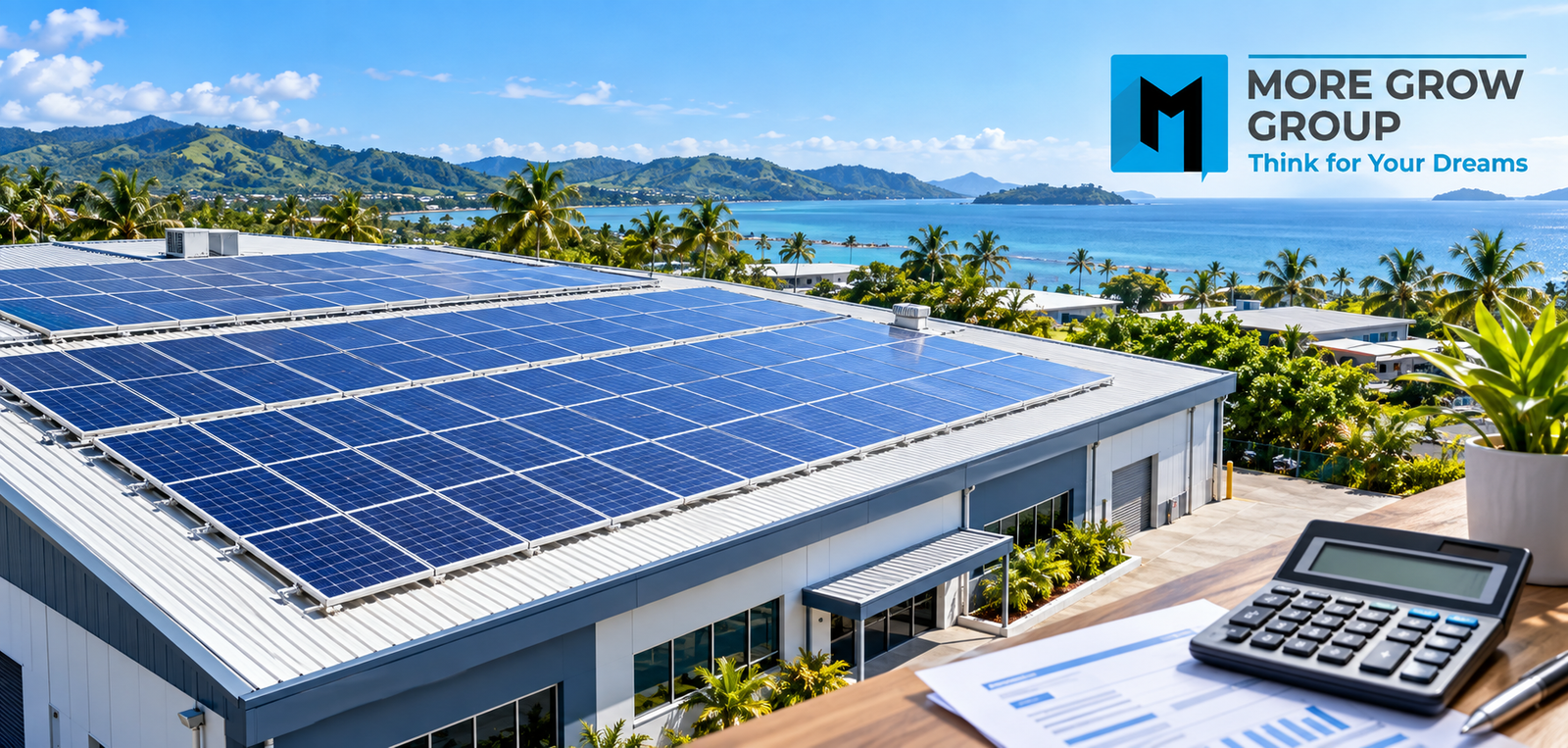
Solar energy allows businesses to generate electricity at their premises. When that electricity is used on site, it can reduce the amount purchased from the grid.
For Fiji businesses, the potential savings depend on electricity consumption, operating hours, site conditions, system design and installation costs. A suitable solar system should be based on the business’s actual energy requirements rather than a standard package or a promised percentage saving.
1. How Does Solar Energy Work for a Business?
Solar photovoltaic panels convert sunlight into electricity. An inverter converts the electricity into a form that the building’s electrical equipment can use.
During daylight hours, the system can supply part of the business’s electricity demand. If demand exceeds solar generation, a grid-connected business generally draws the remaining electricity from the grid.
If the system produces more electricity than the business needs, the surplus may be stored in a battery or exported where authorised. Export arrangements and any payment terms must be confirmed for the particular installation.
The main opportunity for reducing electricity costs is matching solar generation with electricity the business would otherwise purchase.
2. How Can Solar Reduce Electricity Bills?
Using solar electricity on site can reduce grid electricity consumption.
For example, a shop operating during the day may use solar generation to help run lighting, computers and air conditioning. A warehouse may use it for office equipment, ventilation and suitable operational loads.
However, solar will not necessarily remove every part of the electricity bill. Fixed charges, applicable demand charges and electricity used when solar output is insufficient may remain.
A savings assessment should distinguish between:
- Solar electricity generated.
• Solar electricity used directly on site.
• Surplus electricity exported or stored.
• Electricity still purchased from the grid.
• Charges that solar may not reduce.
This helps businesses understand how generation translates into financial savings.
3. Why Do Business Operating Hours Matter?
Solar generation occurs during daylight hours, so businesses with substantial daytime consumption may have more opportunities to use it directly.
Potential examples include:
- Offices operating during normal business hours.
• Retail shops and supermarkets.
• Workshops and manufacturing facilities.
• Warehouses and distribution centres.
• Schools and training facilities.
• Hotels with significant daytime electricity demand.
A restaurant with its highest consumption after sunset may need a different design from an office that closes in the evening.
Reviewing consumption throughout the day helps determine whether solar generation will coincide with the business’s needs.
4. Why Is Correct System Sizing Important?
A larger solar system is not automatically the most economical choice.
If the system produces substantial surplus electricity that cannot be used, stored or exported on worthwhile terms, the additional investment may deliver limited value.
An undersized system may leave useful roof space and daytime savings opportunities unused.
A site assessment should consider:
- Electricity bills and consumption history.
• Daytime demand and seasonal variations.
• Roof area, orientation and shading.
• Roof condition and structural capacity.
• Existing electrical infrastructure.
• Expected changes in business operations.
• Connection and export conditions.
System capacity should be selected using these findings and realistic generation estimates.
5. Can Batteries Increase the Benefits?
Batteries can store solar electricity for later use. This may help businesses with evening demand or specific backup requirements.
However, batteries add costs and introduce storage losses, maintenance considerations and eventual replacement needs.
Businesses should assess:
- How much surplus solar electricity is available.
• How much stored energy they would use.
• Required battery capacity and power output.
• Installation and replacement costs.
• Warranty conditions.
• Whether backup operation is included in the design.
A battery is not essential for every business solar installation. Compare solar-only and solar-with-battery options before deciding.
6. Does Solar Keep a Business Running During a Power Outage?
An ordinary grid-connected solar system generally shuts down during a grid outage for safety. Having panels on the roof does not automatically provide backup electricity.
Backup requires suitable equipment and a system designed to operate safely when separated from the grid.
Businesses that need continuity should identify their essential loads, such as:
- Selected refrigeration equipment.
• Communications and internet equipment.
• Essential lighting.
• Particular computers or payment systems.
• Other equipment identified through a continuity assessment.
The design must account for starting loads, operating demand and the required backup duration. Electricity savings and outage protection should be assessed as separate objectives.
7. How Can Energy Efficiency Improve Solar Savings?
Reducing unnecessary electricity consumption can improve the overall energy plan before solar is installed.
Useful measures may include:
- Replacing inefficient lighting.
• Maintaining air-conditioning systems.
• Checking refrigeration seals and settings.
• Switching off unused equipment.
• Improving controls and operating schedules.
• Investigating unusual overnight consumption.
Where operationally practical, some activities can be scheduled during solar-generating hours.
Avoid changing schedules in ways that compromise product quality, customer service or safety. The aim is to reduce waste and use available generation effectively.
8. What Should Fiji Businesses Check Before Installation?
Businesses should confirm the electrical, structural and approval requirements that apply to their premises.
For premises connected to Energy Fiji Limited, discuss the proposed solar installation and any changes to the connection with EFL before proceeding. EFL’s business connection guidance states that electrical work must meet its installation, wiring and safety standards and is subject to inspection.
Important checks include:
- Applicable grid-connection and export requirements.
• Electrical contractor qualifications.
• Roof condition and structural suitability.
• Landlord permission for rented premises.
• Relevant building or other approvals.
• Metering and protection arrangements.
• Insurance requirements.
• Equipment warranties and local support.
Confirm export permission and payment terms in writing. A savings proposal should not assume that surplus electricity will receive the same value as electricity used on site.
9. How Should Businesses Calculate the Financial Benefits?
A financial assessment should compare the full project cost with realistic net savings.
Costs may include:
- Panels, inverters and mounting equipment.
• Installation and electrical upgrades.
• Approval and connection expenses.
• Batteries, if selected.
• Financing costs.
• Monitoring, maintenance and insurance.
• Expected equipment replacements.
Estimated savings should reflect actual consumption, generation, self-consumption and the applicable electricity charges.
A basic simple-payback calculation is:
Simple payback period = Total installed cost ÷ Estimated annual net savings
For illustration only, a system costing FJ$30,000 with estimated annual net savings of FJ$5,000 would have a simple payback period of approximately six years.
This example is not a quotation or a forecast for a Fiji installation. Simple payback also leaves out factors such as financing, changing tariffs and the timing of future replacement costs. A fuller assessment should consider those factors.
10. How Do Fiji’s Site Conditions Affect Performance?
Solar output varies with sunlight, cloud cover, shading, temperature and equipment condition.
For Fiji installations, site design should also consider relevant exposure to strong winds, heavy rain and coastal corrosion. Roof mounting, electrical protection and equipment selection should suit the location.
Businesses should request a proposal that explains:
- Expected generation and its assumptions.
• Shading and weather considerations.
• Structural and mounting requirements.
• Corrosion protection where relevant.
• Safe maintenance access.
• Monitoring arrangements.
A performance estimate should allow for variations rather than assume identical output every day.
11. Why Do Maintenance and Monitoring Matter?
A solar system needs ongoing attention to maintain dependable performance.
Monitoring can help identify an inverter fault, unexpected output reduction or changes in electricity consumption.
Maintenance may include:
- Reviewing generation reports.
• Checking equipment for faults.
• Inspecting mounting and electrical components.
• Managing new shading from vegetation.
• Cleaning where necessary and appropriate.
• Arranging inspections after severe weather.
Roof access and electrical work should be handled by appropriately qualified personnel.
Keep installation records, warranties and service details together so that problems can be investigated efficiently.
12. Choosing a Solar Provider for Your Fiji Business
A useful proposal should explain how the system matches your business’s consumption and site conditions.
Ask the provider:
- What information supports the proposed system size?
• How much generation is expected to be used on site?
• What assumptions support the savings estimate?
• Which charges may remain on the electricity bill?
• Are approvals and electrical upgrades included?
• Does the system provide backup, and for which loads?
• Who handles maintenance and warranty claims?
• What are the expected future replacement costs?
When discussing solar requirements with MoreGrow Group, provide recent electricity bills, operating hours, location details and any essential backup needs. This gives the discussion a practical starting point.
Conclusion
Solar energy can help Fiji businesses reduce electricity costs by supplying some of the electricity they use during daylight hours.
The financial benefit depends on matching the system to consumption, controlling installation costs and maintaining performance. Batteries and backup capabilities may add value for particular businesses, but they require separate assessment.
A site-specific design, confirmed connection arrangements and transparent savings calculations help businesses decide whether solar is a suitable investment.




Leave A Comment