
Introduction
Medical equipment must produce reliable measurements to support safe and effective healthcare services. Hospitals, clinics, laboratories, dental practices, pharmacies, and other healthcare facilities in Fiji use medical devices every day to monitor patients, conduct tests, and support clinical decisions.
However, the accuracy of medical equipment can change over time because of frequent use, ageing components, transportation, environmental conditions, accidental impact, repairs, or improper storage.
This raises an important question: How often should medical equipment be calibrated?
There is no single calibration interval suitable for every device. The correct frequency depends on the equipment type, level of use, manufacturer recommendations, previous calibration results, operating conditions, and applicable quality requirements.
Establishing an appropriate schedule for medical equipment calibration in Fiji helps healthcare facilities maintain measurement reliability, manage equipment effectively, and reduce the risk of using instruments with undetected accuracy problems.
1. What Is Medical Equipment Calibration?
Medical equipment calibration is the process of checking the measurement performance of an instrument against a recognized reference standard.
Calibration helps determine whether equipment is operating within an acceptable level of accuracy. Where necessary, adjustments or corrective actions can be taken to bring the equipment back within its required performance range.
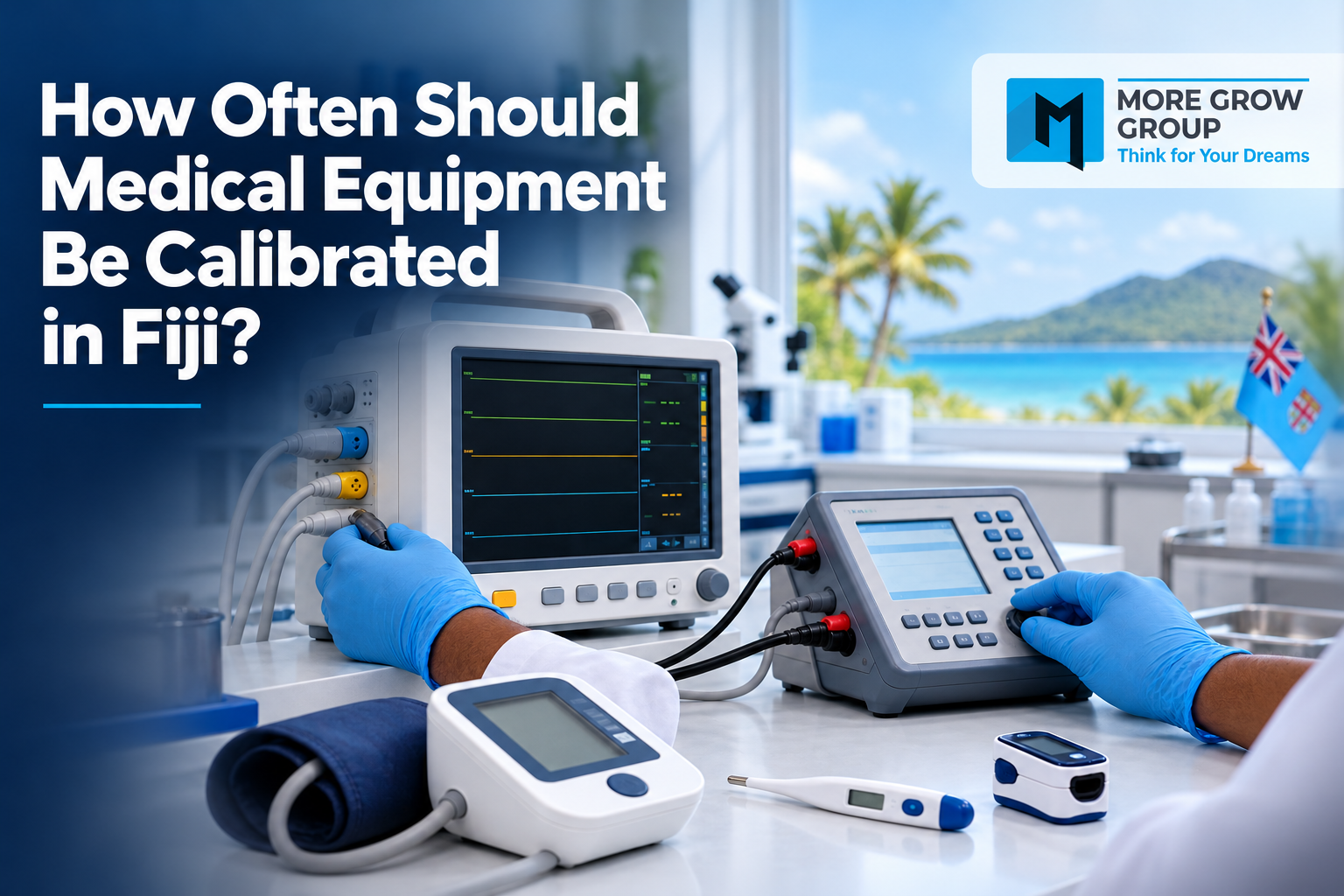
Examples of equipment that may require calibration include:
- Blood pressure monitors
- ECG machines
- Pulse oximeters
- Thermometers
- Weighing scales
- Medical testing instruments
- Temperature monitoring equipment
- Biomedical equipment
Regular calibration provides healthcare organizations with greater confidence in the measurements produced by their equipment.
2. Why Is Calibration Important for Healthcare Facilities?
Healthcare professionals depend on accurate measurements when monitoring patients, conducting tests, and making clinical decisions.
If equipment produces inaccurate measurements, it may affect the reliability of the information available to healthcare professionals.
Regular calibration can help healthcare facilities:
- Maintain measurement accuracy
- Improve confidence in equipment performance
- Identify measurement deviations
- Support equipment quality management
- Reduce the risk of unreliable measurements
- Maintain appropriate equipment records
- Support regulatory and quality requirements
3. Medical Equipment That Requires Regular Calibration
Different types of medical and healthcare equipment can require calibration depending on their application, manufacturer requirements, usage, and applicable standards.
Blood Pressure Monitors
Blood pressure monitors are widely used in hospitals, clinics, and healthcare facilities. Regular calibration helps ensure that blood pressure measurements remain reliable.
ECG Equipment
ECG machines are used to record the electrical activity of the heart. Accurate equipment performance is important for obtaining reliable readings.
Pulse Oximeters
Pulse oximeters measure oxygen saturation and pulse rate. Calibration and performance checks can help ensure that the equipment continues to provide dependable measurements.
Thermometers
Thermometers are used in healthcare facilities for monitoring patient temperatures and in various temperature-controlled environments. Regular calibration helps maintain measurement accuracy.
Weighing Scales
Medical weighing scales are used for measuring patient weight, which can be relevant to healthcare assessments and treatment decisions. Regular calibration helps maintain accurate weight measurements.
4. How Often Should Medical Equipment Be Calibrated?
There is no single calibration interval that applies to every type of medical equipment.
The appropriate calibration frequency can depend on factors such as:
- Manufacturer recommendations
- Equipment type
- Frequency of use
- Operating environment
- Previous calibration results
- Equipment history
- Applicable quality requirements
Healthcare facilities should establish suitable calibration schedules based on the equipment and its intended application.
5. Benefits of Professional Calibration Services
Using a professional calibration service can help healthcare organizations maintain reliable measurement equipment.
A professional calibration service may provide:
Accurate Measurement Verification
Equipment can be tested against appropriate reference standards to determine its measurement performance.
Traceability
Calibration using suitable reference standards can help establish measurement traceability and provide greater confidence in calibration results.
Calibration Documentation
Calibration records and certificates provide documented evidence that equipment has been tested.
Early Identification of Problems
Regular calibration can help identify equipment that is showing measurement deviations or performance issues.
Improved Equipment Management
Maintaining calibration records can help organizations track equipment performance and plan future calibration activities.
6. Why Annual Calibration May Not Be Enough for Every Device
Annual calibration is widely used because it provides a convenient and manageable schedule. However, it should not automatically be applied to every device without considering risk and performance.
For example, a high-use medical instrument operating in a demanding environment may require calibration more than once a year. A stable instrument used occasionally under controlled conditions may not need the same frequency.
The calibration interval should be based on documented factors such as:
- Measurement importance
- Frequency of use
- Equipment condition
- Environmental exposure
- Previous calibration results
- Manufacturer recommendations
- Applicable standards and quality procedures
A risk-based approach can help healthcare facilities allocate resources appropriately while maintaining confidence in critical equipment.
7. Calibration and Preventive Maintenance
Calibration and preventive maintenance are both important, but they serve different purposes.
Calibration checks the measurement accuracy of equipment against a suitable reference standard.
Preventive maintenance helps keep the equipment operational through inspection, cleaning, lubrication, servicing, functional testing, and replacement of worn components.
Completing preventive maintenance does not necessarily confirm measurement accuracy. Similarly, calibration does not replace the need for regular servicing.
Healthcare facilities should coordinate both activities within their medical equipment management program.
8. How to Create a Medical Equipment Calibration Schedule
A structured schedule helps facilities monitor calibration due dates and avoid unintentionally using overdue equipment.
Create an Equipment Register
Prepare a complete list of equipment requiring calibration. Record details such as:
- Equipment name
- Manufacturer and model
- Serial or asset number
- Department or location
- Date placed into service
- Last calibration date
- Next calibration due date
- Calibration frequency
- Equipment condition
- Service and repair history
Assign a Risk Level
Classify equipment according to the importance of its measurements, frequency of use, and possible consequences of inaccurate performance.
High-risk equipment may require closer monitoring and shorter calibration intervals.
Review Manufacturer Instructions
Check the equipment manual and technical documentation for recommended calibration and maintenance requirements.
Examine Calibration History
Review previous certificates to identify measurement drift, repeated failures, or out-of-tolerance results.
Set and Monitor Due Dates
Use an equipment management system, spreadsheet, calendar, or reminder process to track upcoming calibration dates.
Plan calibration before the due date to reduce disruption to healthcare services.
Review the Schedule Regularly
Calibration intervals should be reviewed periodically. They may need to change when equipment usage, condition, location, risk, or performance history changes.
9. What Should a Calibration Certificate Include?
A calibration certificate provides documented evidence of the calibration activity.
Depending on the service and equipment, it may include:
- Equipment identification details
- Manufacturer, model, and serial number
- Calibration date
- Calibration results
- Reference standards used
- Measurement uncertainty, where applicable
- Environmental conditions, where relevant
- Pass, fail, or conformity information
- Details of adjustments made
- Traceability information
- Recommended or assigned next calibration date
- Name or identification of the technician or laboratory
Healthcare facilities should store calibration certificates with their equipment and quality records.
10. Benefits of Maintaining the Correct Calibration Frequency
An appropriate calibration schedule can help healthcare facilities:
- Maintain confidence in measurement results
- Identify equipment drift before it becomes significant
- Support patient safety and quality management
- Reduce the risk of using inaccurate instruments
- Maintain organised equipment records
- Support audits and applicable compliance requirements
- Plan equipment servicing more effectively
- Identify devices that may need repair or replacement
- Improve the reliability and useful life of medical equipment
Regular calibration also helps facilities understand how their equipment performs over time.
11. Choosing Medical Equipment Calibration Services in Fiji
When selecting a calibration provider, healthcare facilities should consider:
- Experience with medical and biomedical equipment
- Trained and technically competent personnel
- Suitable calibration methods and reference standards
- Measurement traceability
- Clear calibration certificates and records
- Appropriate testing equipment
- Ability to calibrate different types of instruments
- Turnaround time and service availability
- Relevant quality and accreditation requirements
Access to professional calibration services in Fiji can help healthcare organizations arrange equipment testing more efficiently and reduce the challenges associated with sending equipment overseas.
Conclusion
Medical equipment should be calibrated at intervals appropriate to its purpose, usage, risk, environment, condition, and performance history. Although annual calibration is commonly used as a starting point, some equipment may require testing every three or six months, while other stable and low-risk devices may be suitable for longer intervals.
Healthcare facilities should follow manufacturer recommendations, monitor previous calibration results, assess clinical risk, and arrange additional calibration following repairs, damage, relocation, or questionable readings.
A structured calibration program with an accurate equipment register, clearly assigned due dates, documented certificates, and regular schedule reviews can help maintain reliable medical equipment across Fiji.
For healthcare organisations seeking medical equipment calibration in Fiji, More Grow Group provides calibration and testing services for a range of medical, biomedical, temperature, pressure, electrical, dental, and other measurement equipment.






Leave A Comment